Brabus Urban E Fragment Edition puts exclusivity before speed
Limited to 10 hand-built motorcycles, the US$50,000 collaboration combines DAB electric engineering with bespoke Brabus components and Hiroshi Fujiwara’s monochrome design.
By Davy Currie · · 5 min read
Key facts
- 01Brabus, DAB Motors and Fragment Design will produce 10 Urban E Fragment Edition electric motorcycles.
- 02The Brabus Urban E Fragment Edition is priced at US$50,000, with hand-building by DAB Motors in France.
- 03The Brabus Urban E Fragment Edition produces 37hp and has a claimed maximum speed of 75mph.
- 04Brabus Urban E Fragment Edition range is quoted at up to 93 miles in city riding.
- 05Brabus Urban E Fragment Edition household charging takes roughly three hours from 20 to 100 per cent.
Brabus, DAB Motors and Hiroshi Fujiwara’s Fragment Design have developed a limited-edition electric motorcycle priced at US$50,000, with just 10 examples to be hand-built in France. The Brabus Urban E Fragment Edition combines a claimed 75mph maximum speed and up to 93 miles of urban range with bespoke components and extensive carbon-fibre bodywork.
What happened
The Fragment Edition takes the existing Urban E platform into a much narrower collector market. German automotive tuning specialist Brabus supplies customised hardware, French electric motorcycle manufacturer DAB Motors undertakes the build, and Fujiwara’s Japanese design label provides the visual identity. Its price is therefore buying a three-way collaboration and restricted production, rather than a new performance category.
The electric powertrain produces 37hp, with a claimed 475Nm of torque measured at the wheel. That last qualification matters: wheel torque is affected by gearing and cannot be compared directly with the engine torque figures commonly quoted for combustion motorcycles. The output is described as 20 per cent above the base DAB model, an increase already introduced on the Urban E rather than a further gain exclusive to this edition.
Underneath the bodywork is a steel double-cross frame, a steel mesh subframe and a cast aluminium swingarm. Both wheels measure 17 inches, while the front suspension uses 46mm upside-down forks. A rear shock offers spring-preload adjustment, and suspension travel is 100mm at each end; the stated weight is 145kg.
Five selectable modes are listed: Eco, Street, Sport, Nitrous Boost and Reverse. These give the rider a choice of operating settings and a reverse function, although the available details do not establish how much performance changes between modes. Nitrous Boost is the name of a setting, not evidence of a separate nitrous-oxide system.
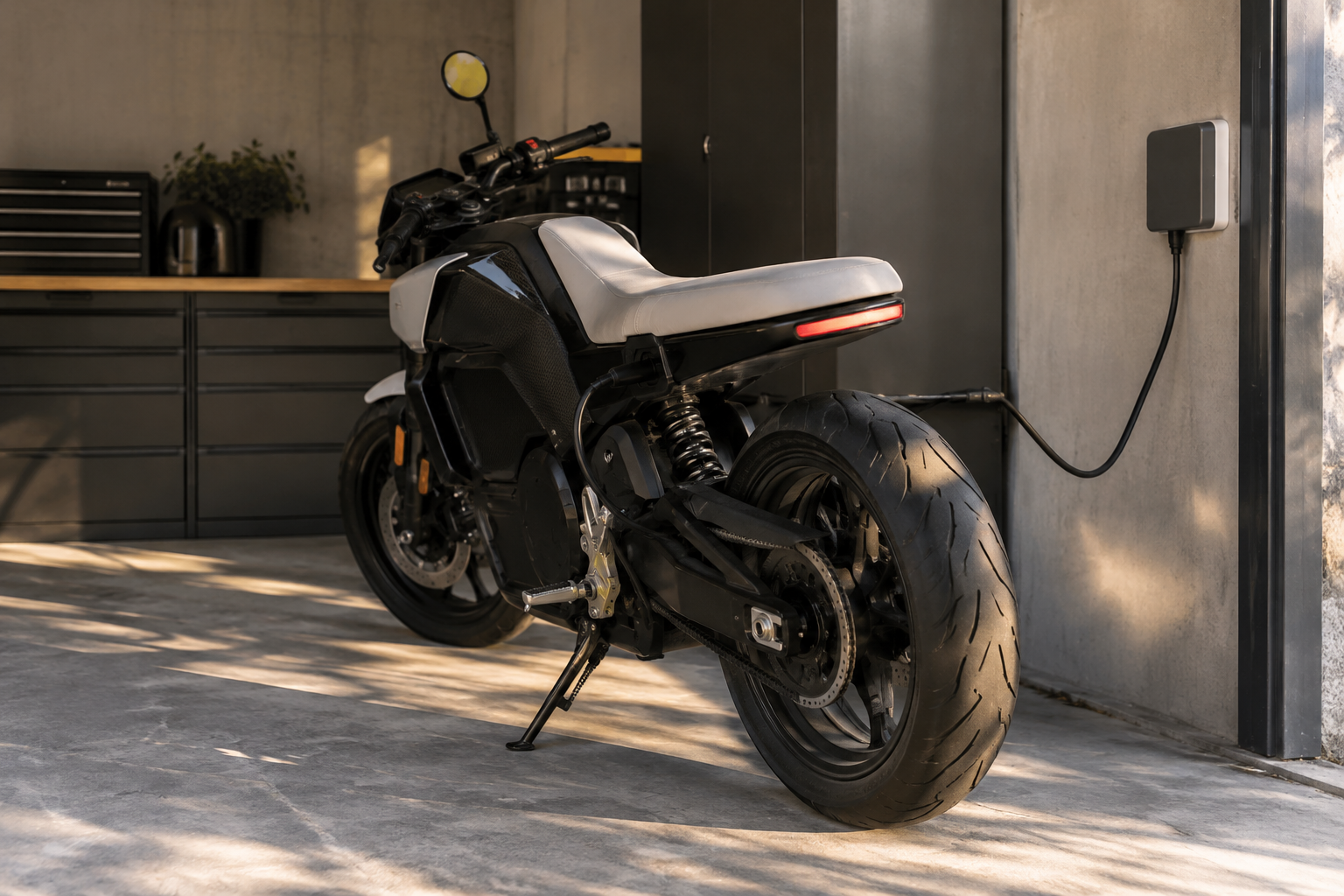
The visual treatment is predominantly black, interrupted by white carbon-fibre wheel covers, white brake calipers and a white leather seat. Carbon fibre also appears in the front mudguard, underbody panels, rear wing and side panels. Brabus has made bespoke handlebars, a headlamp assembly and CNC-machined rear suspension components.
Fragment’s emblem is integrated into the translucent, single-piece LED rear light beneath the seat. That turns the lighting assembly into part of the collaboration’s identity, rather than relying solely on graphics applied to standard panels. For a machine intended to be examined at close quarters, such details carry more of the proposition than its headline speed.
The background
At this price, the useful distinction is between transport engineering and collectible design. A 75mph maximum and a city-focused range claim describe an urban motorcycle, not a high-speed touring machine. Restricting production to 10 units changes its likely audience, but does not change the journeys its underlying specification is best suited to undertake.
The collaboration also extends the meeting point between specialist automotive brands and other design disciplines. In a different part of the premium mobility market, the Jaguar Type 01’s combination of electric performance and Meridian audio shows how named partners can shape a vehicle’s appeal. Here, the partnership is expressed through materials, lighting and finishes rather than a cabin entertainment system.
For an owner considering use from a townhouse or coastal residence, charging is more immediately relevant than the production count. The quoted replenishment time is roughly three hours from 20 to 100 per cent using a household outlet, or three to four hours from empty. That suggests a routine built around parking between journeys rather than relying on rapid roadside stops.
Those times do not establish compatibility with a particular residential charging installation. The supplied connection, electrical requirements and local socket arrangements still need checking before specifying a parking space. An existing car wallbox should not be assumed to serve the motorcycle simply because both vehicles are electric.
The range figure also needs its stated context preserved: up to 93 miles, or 150km, in city riding. It is not a demonstrated motorway range or a guarantee for every route. Speed, gradients, rider load and weather are relevant considerations when assessing an electric motorcycle’s suitability for a regular journey, so a route-based demonstration would be more useful than the maximum figure alone.
What people are saying
The collaborators’ stated proposition rests on three tangible elements: limited production, hand-building and bespoke design. Brabus’s contribution is visible in components beyond the surface finish, while Fragment’s involvement reaches into the rear-light construction. There is no need to treat the edition as a performance breakthrough to understand what the companies are offering.
For a design-led buyer, the pertinent question is how convincingly the detailing works as a complete object. White leather, exposed carbon-fibre surfaces and contrasting wheel covers introduce practical questions about cleaning and cosmetic upkeep. Prospective owners should inspect the finish and ask for care guidance rather than assume a very small production run removes everyday maintenance concerns.
A technically minded owner is likely to place more weight on the controls and manoeuvring behaviour. The Reverse setting is particularly worth trying in the actual parking arrangement, where slope, turning space and access can matter more than peak output. As with BMW’s approach to controls in its 2027 3 Series, the interface deserves assessment separately from the vehicle’s appearance.
For a residence’s technology team, the appropriate brief is modest: establish a suitable charging position and confirm access for storage and servicing. Nothing in the available specification establishes smart-home integration, remote energy control or a connected monitoring service. Those capabilities should not be added to a project schedule on the strength of the electric drivetrain alone.
What happens next
DAB Motors is to hand-build the 10 motorcycles in France. The available details do not establish a delivery timetable, UK allocation or a sterling price. British buyers would therefore need a written quotation clarifying taxes, delivery and any market-specific requirements before treating the US$50,000 figure as an on-the-road cost.
Battery capacity, charging power, warranty terms and the service arrangements are further unanswered questions. These are material omissions for a vehicle intended to be kept as well as ridden: owners need to know who supports the electrical system and how work on collaboration-specific parts would be handled.
Replacement availability deserves particular attention for the bespoke headlamp, rear-light assembly, wheel covers and white seat. A numbered production run is not a published spare-parts commitment. Before purchase, asking about repair procedures and replacement lead times would help distinguish the appeal of owning something scarce from the inconvenience of maintaining it.
Why this matters
The Brabus Urban E Fragment Edition offers a distinctive addition to a design-conscious owner’s garage, but its strongest case is craftsmanship and rarity rather than speed or range. For PRIMAL WIRE readers, the sensible purchase test is whether the materials, riding experience and ownership support justify the premium together. Household charging can make an electric motorcycle straightforward to accommodate; a 10-unit collaboration still needs the same practical scrutiny as any technology expected to remain useful for years.
Questions answered
+What is the Brabus Urban E Fragment Edition?
It is a limited-edition electric motorcycle developed by Brabus, DAB Motors and Hiroshi Fujiwara’s Fragment Design, combining the Urban E platform with bespoke components and a black-and-white finish.
+How much does the Brabus Urban E Fragment Edition cost?
The quoted price is US$50,000. A sterling price and UK on-the-road costs have not been established in the available details.
+How many Brabus Urban E Fragment Edition motorcycles will be made?
Only 10 examples are planned worldwide. Each will be hand-built by DAB Motors in France.
+How fast is the Brabus Urban E Fragment Edition?
Its claimed maximum speed is 75mph, or 120km/h. The electric powertrain produces 37hp, with a claimed 475Nm of torque measured at the wheel.
+What is the range of the Brabus Urban E Fragment Edition?
Range is quoted at up to 93 miles, or 150km, in city riding conditions. That figure should not be treated as a motorway range claim.
+How long does the Brabus Urban E Fragment Edition take to charge?
Quoted household-outlet charging times are approximately three hours from 20 to 100 per cent, or three to four hours from empty.
+What riding modes does the Brabus Urban E Fragment Edition have?
The five listed modes are Eco, Street, Sport, Nitrous Boost and Reverse. The available details do not quantify the performance differences between settings.
More in Cool Stuff
 Cool Stuff
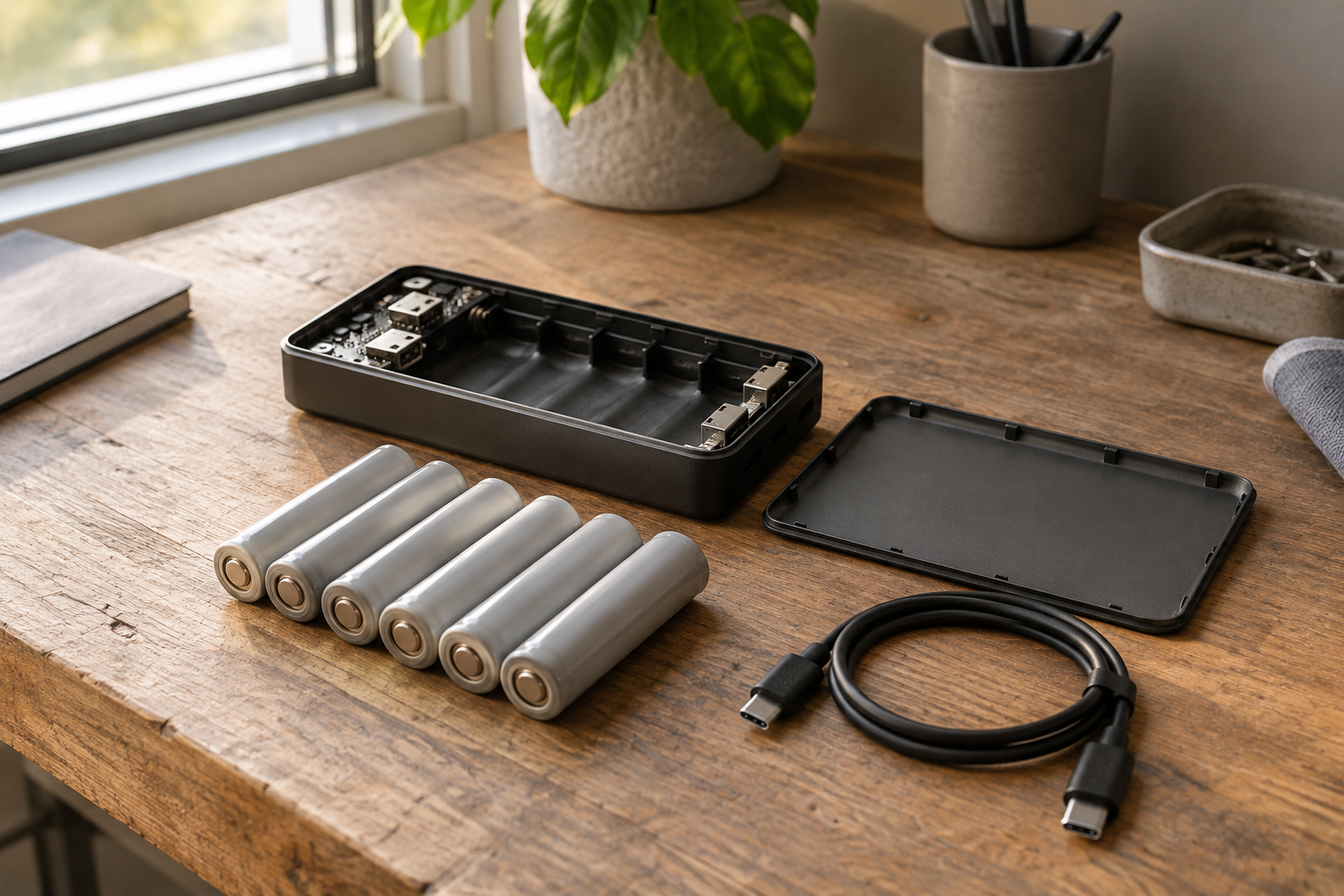
Ctrl Energy Zero makes the 100W power bank repairable
Replaceable cells and magnetic accessories give Ctrl Energy’s crowdfunded power bank an unusually serviceable design, with worldwide deliveries planned for June 2027.
14 October 2026 · 5 min
 Cool Stuff
Abxylute M5 and M6 bring sliding controls to phone gaming
Two magnetic phone controllers trade conventional gamepad bulk for sliding decks, with different connections, controls and charging requirements.
11 October 2026 · 5 min
 Cool Stuff
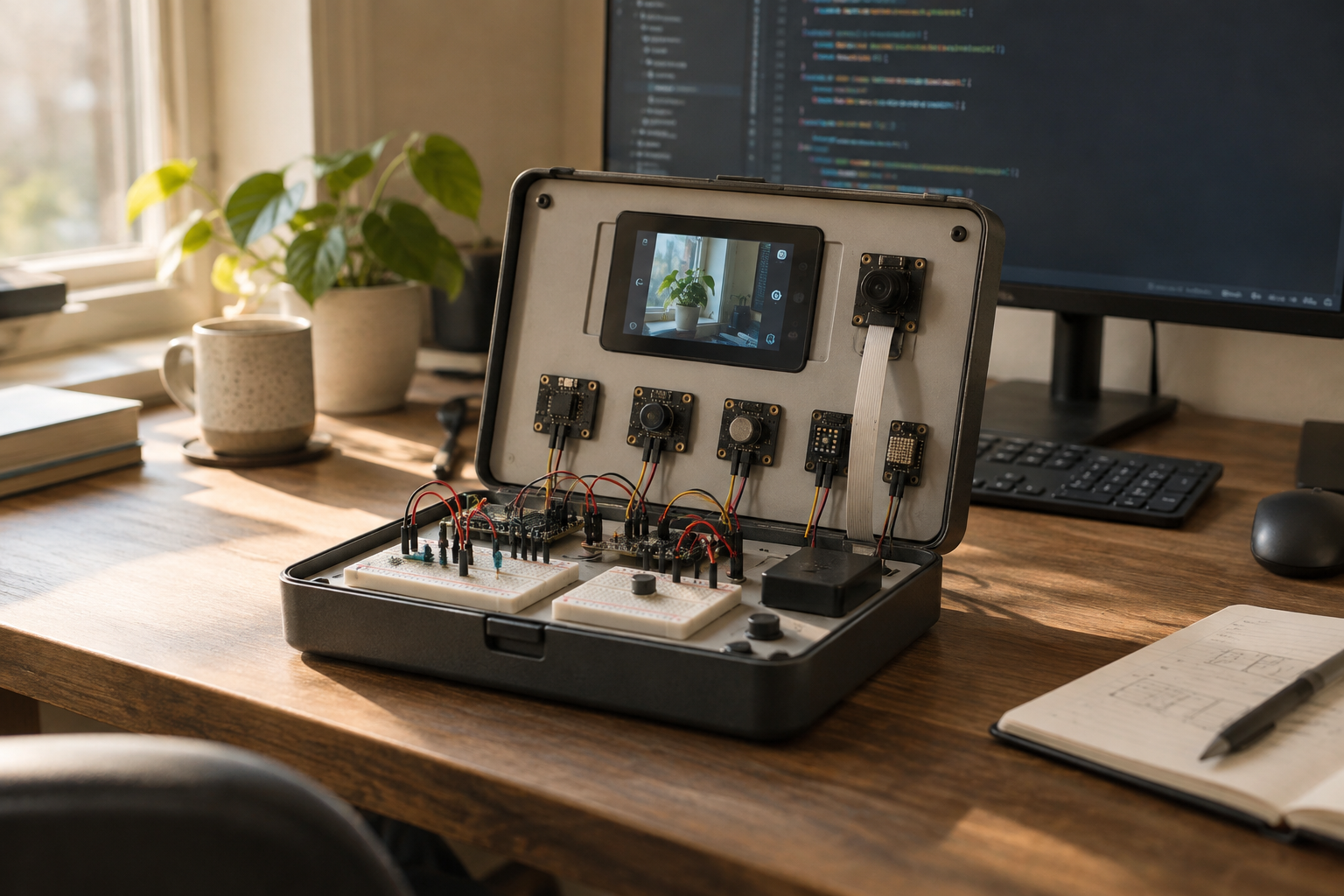
Elecrow CrowPi 3 puts sensors at the centre of AI learning
A portable Raspberry Pi learning station combines 41 modules with practical coding lessons, though buyers should distinguish its hardware capabilities from its online AI services.
11 October 2026 · 5 min