XGIMI Horizon 30 adds lens shift to 4K/120Hz projection
Three triple-laser projectors arrive in November, combining higher claimed brightness with optical installation tools and UK prices starting at £1,699.
By Davy Currie · · 5 min read
Key facts
- 01XGIMI Horizon 30 UK prices are £1,699 for Pro, £2,099 for Max and £2,549 for Ultra Max.
- 02XGIMI specifies 4,800, 5,300 and 6,000 ISO lumens for the Horizon 30 Pro, Max and Ultra Max respectively.
- 03All three XGIMI Horizon 30 models support claimed native 4K/120Hz playback, VRR, ALLM and AMD FreeSync.
- 04XGIMI Horizon 30 includes optical zoom, lens shift and Lens Memory for up to five picture configurations.
- 05XGIMI Horizon 30 UK availability is scheduled for November 2026, with pre-orders already open.
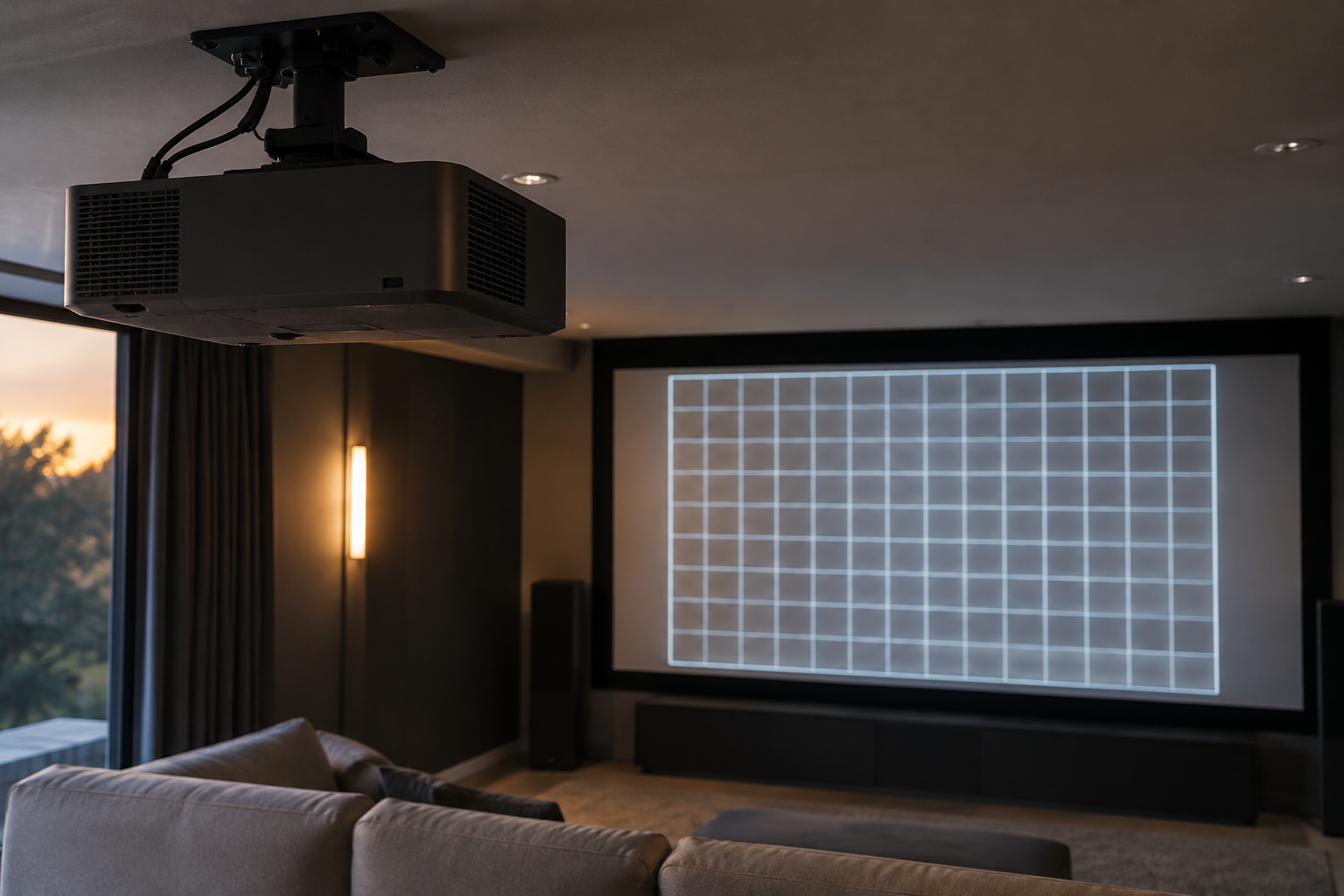
XGIMI has unveiled three Horizon 30 home cinema projectors for UK availability in November 2026, with prices starting at £1,699 and pre-orders already open. The Pro, Max and Ultra Max combine RGB triple-laser illumination and claimed native 4K/120Hz playback with optical zoom, lens shift and stored picture configurations—features that make placement as important a part of this launch as brightness.
What happened
The Horizon 30 Pro costs £1,699, the Horizon 30 Max £2,099 and the flagship Horizon 30 Ultra Max £2,549. XGIMI specifies brightness at 4,800, 5,300 and 6,000 ISO lumens respectively, with corresponding native contrast ratios of 8,000:1, 9,000:1 and 10,000:1. These are manufacturer figures, not independently established performance in a calibrated cinema installation.
All three models support Dolby Vision, HDR10+ and IMAX Enhanced content. XGIMI also includes its Dual Intelligent Iris System, which adjusts light output in response to the scene, and an X-Master Red Ring Lens intended to maintain image sharpness. Dynamic light adjustment and native contrast are different characteristics; the former should not be treated as proof of the latter.
The installation package includes optical zoom and lens shift, alongside tilt and rotation adjustment. Lens Memory can retain up to five picture configurations for different screen formats or viewing situations. The announcement does not specify the zoom ratio, lens-shift range or precisely which settings each memory recalls, so those details remain necessary before fixing a ceiling position or ordering a screen.
Gaming features extend beyond the headline refresh rate to Variable Refresh Rate, Auto Low Latency Mode and AMD FreeSync compatibility. Google TV supplies the built-in streaming interface, while two 12W Harman Kardon speakers and DTS Virtual:X processing provide onboard sound. That combination allows viewing without a separate streaming box or audio system, although a dedicated cinema would normally have a more extensive signal chain.
The background
First previewed at IFA 2026, the Horizon 30 range follows XGIMI’s Horizon 20 series. The company describes the changes as improvements in brightness, native contrast and motion handling, together with more flexible installation. The supplied specifications do not provide a like-for-like comparison against individual Horizon 20 models, so the scale of each improvement cannot yet be established from this announcement alone.
For a luxury living room, lens shift can be more consequential than another picture preset. It moves the projected image optically, allowing some separation between the ideal projector position and the screen’s centreline. Optical zoom changes image size within the lens’s operating range. Together, they can help reconcile a screen with ceiling beams, seating positions and architectural constraints without relying on digital geometric correction.
Tilt and rotation offer a different kind of convenience: they change where the projector points. Installers should not assume that those adjustments are interchangeable with lens shift or that every off-axis position will preserve the same image geometry. The useful question is how much adjustment remains available at the required throw distance, not simply whether the specification lists several positioning tools.
Brightness needs similar interpretation. More light output can provide headroom for a larger image, but screen area, surface characteristics and room illumination determine how much of that advantage reaches the viewer. Ambient light still lifts the apparent black level. The room-and-screen relationship discussed in our examination of large-screen living-room projection therefore remains relevant, even though that installation uses a different projector architecture.
A 120Hz signal capability is particularly pertinent to compatible gaming and high-frame-rate material; it does not mean that ordinary films contain 120 distinct frames each second. Nor does refresh rate alone establish responsiveness. Input lag, the selected picture mode and the interaction between HDR and gaming features will matter when judging the Horizon 30 as a display for a games room or mixed-use cinema.
What people are saying
XGIMI’s stated emphasis is on serving film enthusiasts, sports viewers and gamers across different viewing environments. Its specification choices support that broad positioning: dynamic HDR formats address cinema content, high refresh rates and adaptive synchronisation address gaming, and Google TV reduces the number of external components needed for everyday streaming. No independent viewing assessment accompanies the launch details supplied.
For owners, the clearest purchasing question is whether the brighter models justify their premiums in the intended room. Moving from Pro to Max costs £400 for a specified increase of 500 ISO lumens and 1,000:1 in native contrast; moving from Max to Ultra Max costs another £450 for 700 ISO lumens and the same stated contrast increment. A demonstration at the intended image size would be more informative than comparing those numbers in isolation.
For integrators, the optical controls make the range worth investigating, but do not establish compatibility with a whole-home control system. The announcement does not identify a control API, supported automation drivers or the behaviour of power and input commands. Those are practical procurement questions where a projector must respond reliably to a single room scene rather than operate as a standalone appliance.
The audio specification should also be read according to the installation. Onboard speakers can simplify casual viewing, but virtual surround processing is not a substitute for separately positioned cinema loudspeakers. Owners considering streamed performances, such as those explored in our coverage of Sony and Berlin Phil Media’s concert technology, should assess the sound system alongside the picture rather than allocate the entire budget to projection.
What happens next
UK availability is scheduled for November, with pre-orders receiving two pairs of 3D glasses and a choice of an XGIMI floor stand or ceiling mount. The offer also includes a £400 voucher towards an XGIMI Ascend Screen. That is a conditional screen-purchase benefit, not a £400 reduction in the projector’s listed price; owners should evaluate the complete installation cost accordingly.
Before specifying a model, installers need the full optical and connection documentation. Throw distances, chassis dimensions, mounting requirements and operating noise will determine whether a proposed position is viable. For gaming systems routed through an AV receiver or switching matrix, the complete connection path must support the desired video format; the projector’s capability cannot compensate for a bottleneck elsewhere.
Screen integration warrants its own check, particularly where Lens Memory is intended to support several viewing formats. The projector’s recalled settings need to work with the screen’s dimensions and any masking or motorised movement. Our coverage of motorised cinema-screen control examines that separate coordination task. The launch information does not establish automatic communication between Horizon 30 memories and external screens.
Why this matters
The Horizon 30 range brings optical placement tools, adaptive gaming features and substantial claimed light output into a £1,699–£2,549 price bracket. For owners and developers, that creates scope to consider projection in rooms where equipment position is constrained by the interior. The sensible specification decision will turn on verified optical limits, measured picture performance and dependable system control—not on selecting the brightest model by default.
Questions answered
+How much does the XGIMI Horizon 30 cost in the UK?
The Horizon 30 Pro costs £1,699, the Horizon 30 Max costs £2,099 and the Horizon 30 Ultra Max costs £2,549.
+When is the XGIMI Horizon 30 available?
UK availability is scheduled for November 2026. Pre-orders are already open.
+Does the XGIMI Horizon 30 support 4K at 120Hz?
XGIMI states that all three Horizon 30 models support native 4K/120Hz playback. Gaming features also include Variable Refresh Rate, Auto Low Latency Mode and AMD FreeSync compatibility.
+Does the XGIMI Horizon 30 have lens shift?
The range includes lens shift and optical zoom, plus tilt and rotation adjustment. Lens Memory stores up to five picture configurations. The launch details do not specify the lens-shift range or zoom ratio.
+How bright is the XGIMI Horizon 30 Ultra Max?
XGIMI specifies 6,000 ISO lumens and a native contrast ratio of 10,000:1 for the Horizon 30 Ultra Max. These are manufacturer claims rather than independently verified measurements.
+Does the XGIMI Horizon 30 have Google TV?
All three models include Google TV for streaming access. Onboard audio comes from two 12W Harman Kardon speakers with DTS Virtual:X processing.
+What is included in the XGIMI Horizon 30 pre-order offer?
Pre-orders include two pairs of 3D glasses, a choice of an XGIMI floor stand or ceiling mount, and a £400 voucher towards an XGIMI Ascend Screen. The voucher is not a discount on the projector itself.
More in Latest Tech
 Latest Tech
Google Photos and Drive need a home media archive brief
Google’s storage and video services make personal media readily accessible, but a luxury-home specification should distinguish viewing convenience from long-term custody.
16 October 2026 · 5 min
 Latest Tech
Android smart-home controls need more than open-source code
Google’s development model and Android’s expanding device family make software dependencies, app access and support essential questions for residential control systems.
16 October 2026 · 5 min
 Latest Tech
ChatGPT hallucinations demand checks on smart-home specifications
OpenAI’s assistant can accelerate technology research, but plausible errors make independent verification essential before an answer becomes part of a residential installation.
15 October 2026 · 5 min