Abxylute M5 and M6 bring sliding controls to phone gaming
Two magnetic phone controllers trade conventional gamepad bulk for sliding decks, with different connections, controls and charging requirements.
By James Whitcombe · · 5 min read
Key facts
- 01Abxylute’s Kickstarter prices start at US$59 for the M5 and $65 for the M6, excluding delivery.
- 02The 170g Abxylute M5 uses USB-C, offers pass-through charging and has no internal battery.
- 03The 191g Abxylute M6 uses Bluetooth 5.3 and claims ten-hour runtime from a 500mAh battery.
- 04Abxylute plans M6 shipping from November and M5 shipping from December, with $10 delivery per unit.
- 05Both Abxylute controllers offer four vibration levels and selectable NS, XInput and PS input modes.
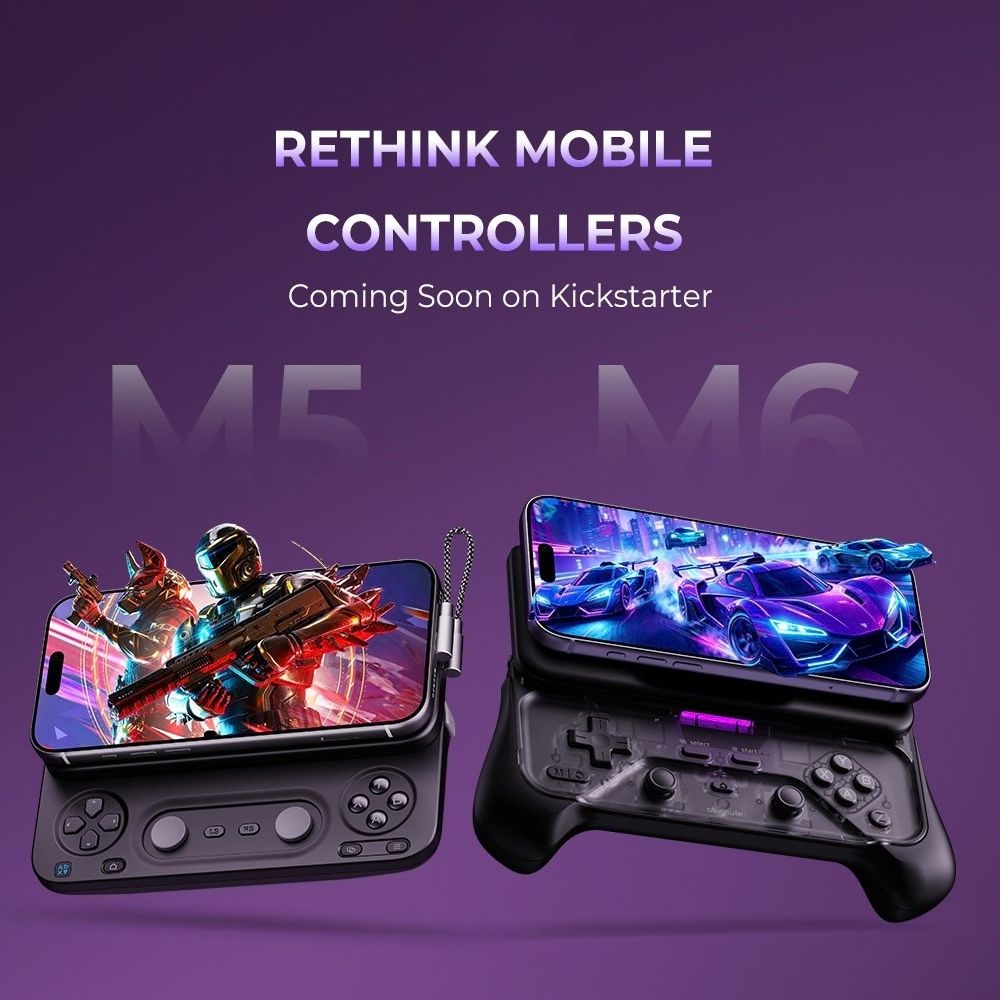
Abxylute is crowdfunding its M5 and M6 magnetic phone controllers through a Kickstarter campaign advertised to launch on 6 October, with worldwide deliveries planned from November and December respectively. Starting at US$59 for the M5 and $65 for the M6, the sliding accessories offer two distinct approaches to portable gaming: a battery-free USB-C controller or a Bluetooth model with larger sticks and motion sensing.
What happened
Both controllers place the phone on a magnetic mount above a sliding control deck, rather than gripping it between two extending halves. Opening the mechanism roughly doubles the controller’s width and exposes the buttons, directional controls and joysticks. The intended benefit is a smaller package when the controller is not being used.
The magnetic mounting position can be adjusted to accommodate different handset layouts and camera protrusions. Abxylute includes an adhesive magnetic ring for phones without MagSafe, although that does not establish universal compatibility with every handset, case or camera arrangement. Owners should still check the physical fit of their particular combination.
The 170g M5 connects through USB-C and has no internal battery to charge. It also offers pass-through charging, allowing the phone to receive power during play. Its low-profile sliding sticks are not clickable; separate LS and RS buttons provide those inputs instead, changing the finger movements required by games that use stick presses frequently.
The M5’s other controls include a separated-button D-pad, micro-switch shoulder triggers and a programmable macro button for combinations or quick actions. These are meaningful design choices rather than merely a reduced version of the M6: players accustomed to a conventional directional pad may find the divided arrangement a different proposition.
The 191g M6 uses Bluetooth 5.3 and a 500mAh battery, with Abxylute claiming up to ten hours of play per charge. Its clickable capacitive sticks sit in a recessed area, alongside a traditional D-pad. Analogue Hall Effect linear triggers can switch to a fast-trigger mode for action games, while a six-axis gyroscope provides motion input.
Both models have dual z-axis linear vibration motors with four intensity settings. A companion app handles configuration, button remapping, vibration and stick sensitivity, and includes a game library. A physical selector switches between NS, XInput and PS input modes; support for those modes should not be mistaken for confirmation that every game recognises every feature.
The background
Phone gaming controllers commonly prioritise familiar gamepad ergonomics, either attaching a handset above a full-sized controller or holding it between extendable grips. Abxylute’s sliding approach instead prioritises the packed shape. For an owner moving between home, aircraft and yacht, that is a practical distinction: an accessory left behind because it is cumbersome offers no benefit at all.
The company already sells controllers and accessories, including the M4, another magnetic model with a smaller, squarer form. The M5 and M6 therefore extend an existing hardware range rather than marking Abxylute’s first controller project. That history provides useful context, but it does not remove the delivery and execution risks attached to crowdfunding.
There is also an established price reference in the $149 OhSnap Mcon. Abxylute’s expected retail prices are $84.99 for the M5 and $89.99 for the M6, putting both below that figure even without the campaign discount. Price alone cannot settle the comparison, however: sliding mechanisms, mounting security and control feel require assessment in use.
The broader appeal is similar to that of dedicated portable audio such as the Astell & Kern SR35: better physical interaction away from a fixed entertainment system. Here, the phone remains the screen and computing device. The accessory changes how a game is operated, not the handset’s processing capability, display quality or available software.
What people are saying
Abxylute presents the M5 as the slimmer, direct-connected option and the M6 as the more substantial tactile experience. Its stated features support that distinction, but neither connection type makes one model automatically superior. Buyers are choosing between different control layouts and maintenance requirements as much as between wired and wireless communication.
For the M5, the important qualification concerns latency. A USB-C connection avoids the wireless link between controller and phone, but it cannot guarantee literally lag-free play: the game, operating system and display still contribute delay. Pass-through charging is arguably the more readily understood everyday advantage, particularly during longer sessions near a power outlet.
For M6 buyers, the ten-hour battery figure remains a manufacturer claim rather than an independently established result. Bluetooth removes the need for a direct controller-to-phone cable, but introduces another battery into the travel routine. The 21g weight increase over the M5 is modest; the different sticks, triggers and directional pad are likely to be more consequential to preference.
Owners considering either model should also distinguish pocketability from comfort. Abxylute offers an optional magnetic grip that attaches underneath and extends into the palm. That acknowledges the compromise inherent in a flat controller: making it easier to carry does not necessarily make it the best shape to hold for an extended session.
What happens next
Abxylute’s stated shipping sequence puts the M6 first, from November, followed by the M5 from December, subject to the campaign proceeding as planned. Delivery is listed at a flat $10 per unit worldwide. The announced figures are in US dollars; a confirmed sterling retail price is not supplied.
Adding that shipping charge makes the advertised campaign outlay $69 for one M5 or $75 for one M6, before any applicable taxes or currency-conversion costs. The optional grip is an additional purchase, but its price is not provided. A buyer comparing the two should therefore separate the controller price from the cost of the complete configuration they want.
Several specification questions remain useful checks before backing. These include exact handset and case compatibility, pass-through charging capability on the M5, and which games expose vibration or motion control on the M6. The presence of an input-mode switch or gyroscope does not by itself answer how an individual title behaves.
Delivery should also be treated as a proposed schedule rather than a retail stock promise. A sensible assessment once hardware is available would examine the sliding mechanism, magnetic retention during play and access to the phone’s connectors. Those checks matter more to its standing among desirable portable technology than the campaign discount alone.
Why this matters
For owners seeking compact entertainment on journeys or aboard a yacht, Abxylute offers a potentially useful alternative to packing a separate handheld console or full-sized gamepad. The purchasing decision should begin with preferred controls and the actual handset, then account for charging and delivery risk. The M5’s wired simplicity and the M6’s richer input hardware serve different priorities; neither needs to be framed as the default upgrade.
Questions answered
+What is the difference between the Abxylute M5 and M6?
The M5 uses USB-C, low-profile sliding sticks and separated directional buttons. The M6 uses Bluetooth 5.3, larger clickable sticks, a traditional D-pad, analogue Hall Effect triggers and a six-axis gyroscope.
+How much do the Abxylute M5 and M6 cost?
Kickstarter pricing starts at US$59 for the M5 and $65 for the M6, plus $10 delivery per unit. Expected retail prices are $84.99 and $89.99 respectively.
+When will the Abxylute M5 and M6 ship?
Abxylute plans worldwide M6 shipments from November and M5 shipments from December. These are crowdfunding delivery targets, not guaranteed retail availability dates.
+Do the Abxylute M5 and M6 work without MagSafe?
Both include an adhesive magnetic ring for phones without MagSafe. Owners should still check handset, case and camera-layout compatibility rather than assume every combination will fit.
+Does the Abxylute M5 charge your phone?
The M5 supports pass-through charging, allowing the phone to receive power while playing. The controller itself has no internal battery.
+How long does the Abxylute M6 battery last?
Abxylute claims up to ten hours of play from the M6’s 500mAh battery. That figure is a manufacturer claim, not an independently verified result.
+Can you remap buttons on the Abxylute M5 and M6?
The companion app supports button remapping, vibration adjustment and joystick sensitivity settings. Both controllers also have a physical selector for NS, XInput and PS input modes.
More in Cool Stuff
 Cool Stuff
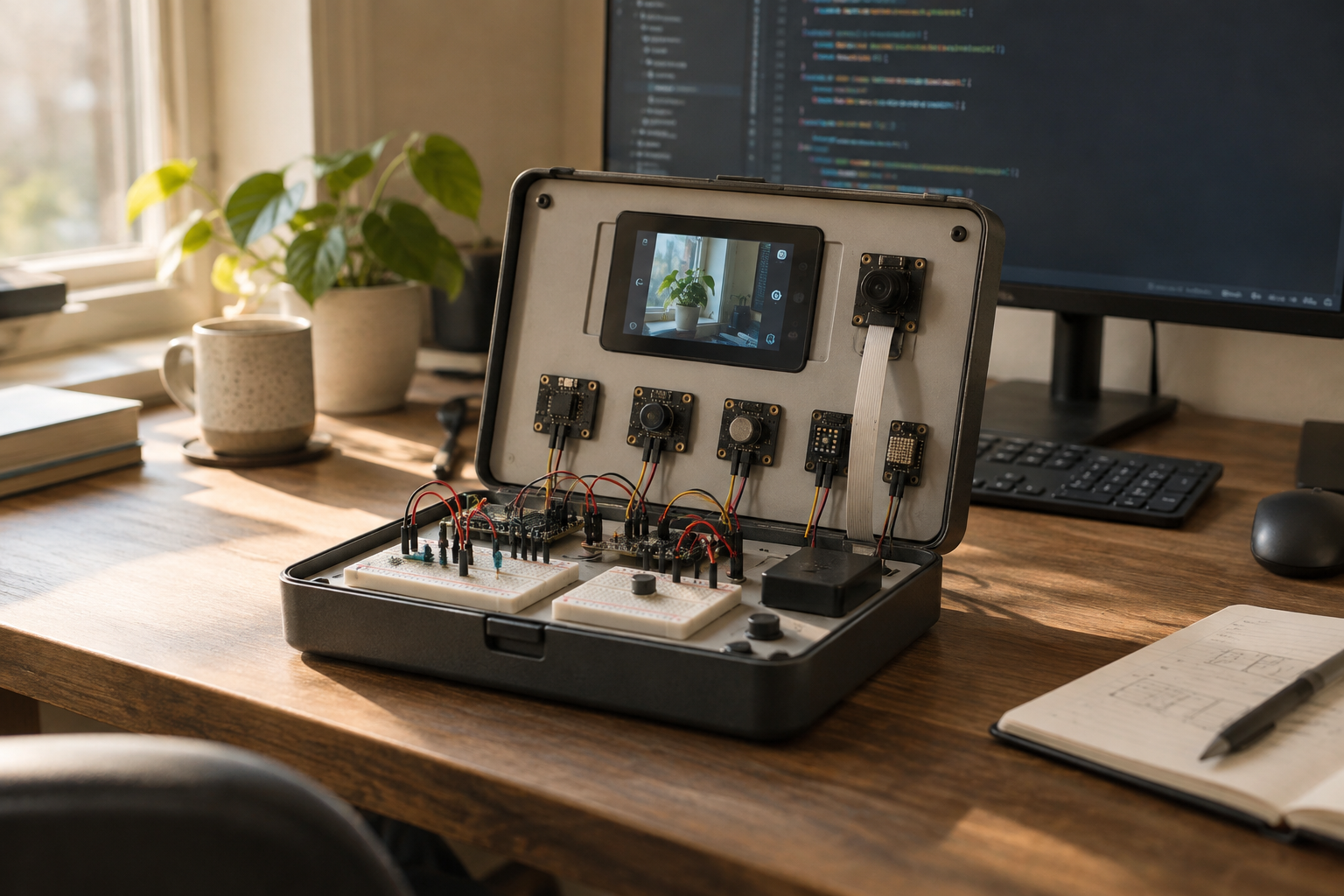
Elecrow CrowPi 3 puts sensors at the centre of AI learning
A portable Raspberry Pi learning station combines 41 modules with practical coding lessons, though buyers should distinguish its hardware capabilities from its online AI services.
11 October 2026 · 5 min
 Cool Stuff
Jaguar Type 01 electric GT pairs 1,000hp with Meridian audio
Jaguar’s £120,000 electric grand tourer combines an unusual battery layout, seat-integrated bass and rapid charging, with orders due to open in early 2027.
8 October 2026 · 5 min
 Cool Stuff
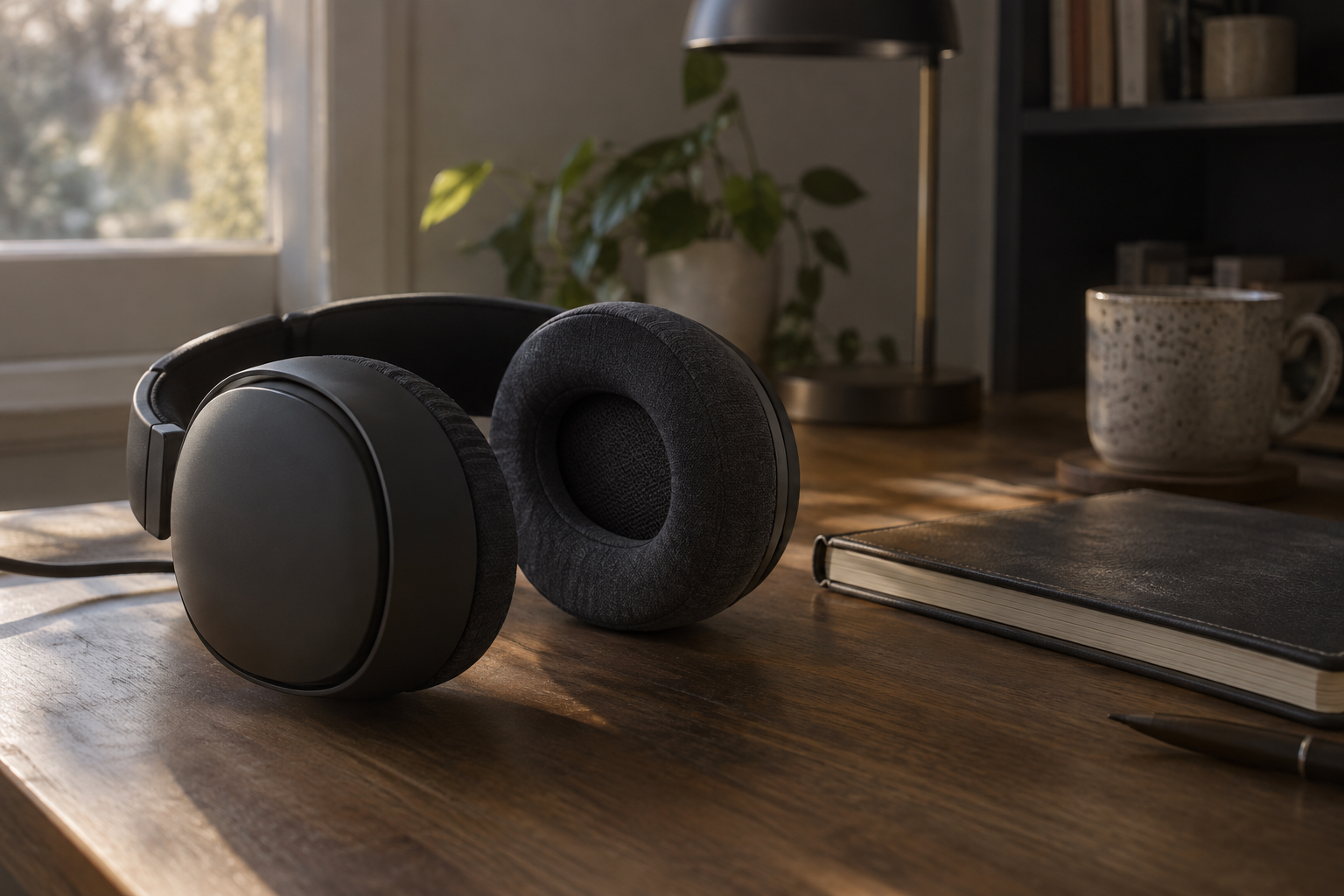
Neurable One brings EEG focus tracking to everyday headphones
Neurable’s US$499 headphones combine wireless audio with brain-signal tracking, offering a new kind of feedback for the home office—with important limits.
8 October 2026 · 5 min