Neurable One brings EEG focus tracking to everyday headphones
Neurable’s US$499 headphones combine wireless audio with brain-signal tracking, offering a new kind of feedback for the home office—with important limits.
By Davy Currie · · 5 min read
Key facts
- 01Neurable One costs US$499 and is currently available only in the United States.
- 02Neurable One embeds 12 fabric-based EEG sensors in its ear cushions, with six sensors per ear.
- 03Neurable One tracks eight metrics, largely comparing readings against the wearer’s own previous results.
- 04Neurable rates One battery life at 22 hours for playback or 12 hours with EEG tracking.
- 05Neurable’s first 700 One units are shipping; new orders have an estimated four-to-eight-week wait.
- 06Neurable says One is not a medical device and does not read thoughts, words, images or mood.
Neurable has begun shipping its US$499 One headphones in the United States, combining wireless listening with 12 embedded sensors that measure electrical brain activity. The first 700 units are shipping, introducing a productivity wearable designed to report changes in focus and fatigue without requiring a separate headband or electrode cap.
What happened
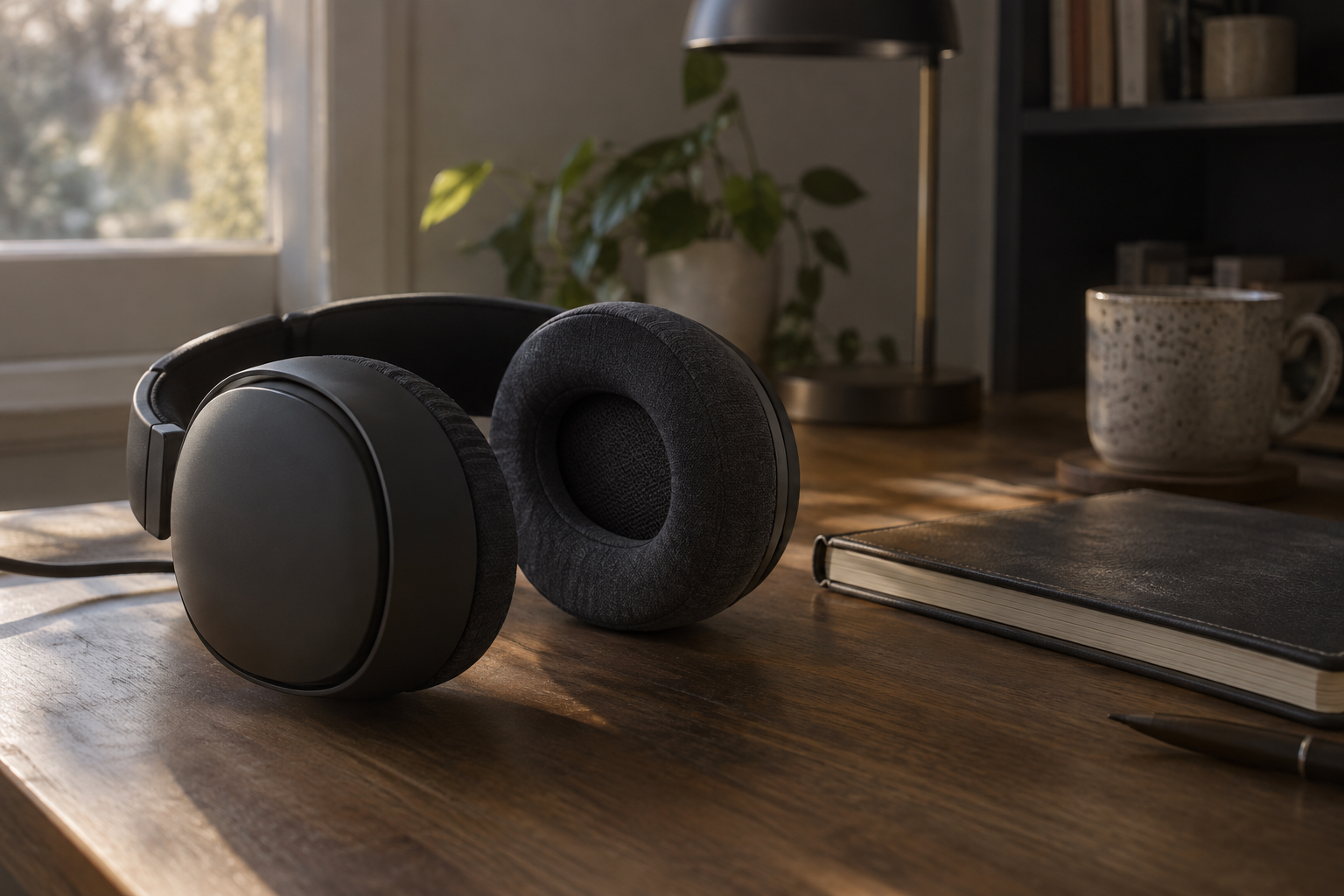
The One is the first product designed, built and sold entirely by Neurable, rather than delivered through a partner. Its distinctive hardware is concealed in the ear cushions: six fabric-based electroencephalography, or EEG, sensors on each side collect signals while the headphones are worn normally. No conductive gel or protruding probes are required.
Those readings feed a companion app for iOS and Android. During work sessions, the system provides a live focus score, makes subtle audio adjustments when attention drifts and recommends breaks when its analysis indicates fatigue. This makes the listening experience part of the feedback mechanism, rather than leaving the wearer to consult a dashboard continually.
The app tracks eight metrics, including Focus, Load, Sleepiness, Brain Battery and Alpha Peak Frequency. Results are largely compared with the wearer’s own previous readings, not a population-wide benchmark. A higher or lower score is therefore intended to describe personal change, rather than establish where someone ranks against other users.
There is also a one-minute check-in performed with eyes closed. Neurable presents this as a way to compare readings before and after everyday changes, such as another coffee or a break from the desk. Weekly and monthly reports extend that comparison beyond individual sessions, although a change in a reading does not by itself establish its cause.
The audio specification comprises 40mm beryllium drivers, active noise cancellation and an ambient mode supported by six microphones. Bluetooth 5.2 provides multipoint connectivity, with AAC and aptX decoding. For someone alternating between a computer and phone in a residential study, multipoint is a practical feature independent of the brain-sensing functions.
The background
Neurable emerged from a University of Michigan brain-interface research laboratory in 2015. The company has spent roughly a decade developing the technology and bringing it to partner products before taking responsibility for the complete headphone. That shift puts the sensing hardware, everyday ergonomics and customer experience within a single product business.
EEG itself is an established measurement technique: it records electrical activity detectable at the surface of the head. The challenge here is not discovering a new signal, but extracting useful information in circumstances very different from a controlled laboratory. Walking, jaw movement and the act of listening all complicate measurement in something intended for routine use.
Neurable says its algorithms filter interference from those activities, including music and the headphones’ own noise cancellation. The electrodes record at 16-bit resolution and 125Hz, while the company cites more than 80 patents supporting its technology. Those specifications describe the acquisition system; they are not, on their own, evidence of how accurately a fatigue alert will correspond to an individual wearer’s experience.
This places the One in a different buying category from conventional premium listening equipment. With a device such as the Astell & Kern SR35 portable player, the purchasing discussion centres on music playback and the listening chain. Neurable is asking buyers to place additional value on measurements collected during the hours they already spend wearing headphones.
For a luxury home office, that is a potentially useful distinction. Personal feedback can accompany work without adding a visible desktop instrument or changing the room’s infrastructure. It should nevertheless remain separate from an automation specification unless interfaces and control capabilities are explicitly documented; the announced features describe a headphone-and-app system, not a controller for lighting, blinds or ventilation.
What people are saying
Neurable’s position is that these measurements should help users understand their own patterns. The emphasis on personal baselines supports that approach: the useful question is whether a different working routine coincides with a change in readings, rather than whether one person has a supposedly better brain score than another. Owners should read the reports as comparisons, not performance rankings.
The company also draws a clear boundary around what it measures. It says the One does not read thoughts, words, images or mood. That distinction matters because a set of electrical measurements and inferred attention metrics is not a record of what a wearer is thinking, even if the language of brain sensing can suggest otherwise.
The product is not a medical device and is not intended to diagnose, treat or monitor any condition. For buyers considering it because of persistent tiredness or difficulty concentrating, that restriction is more consequential than the number of dashboard metrics. A consumer biofeedback system should not be treated as a substitute for clinical assessment.
On privacy, Neurable says it neither sells brain data nor uses it for advertising. That addresses two possible commercial uses, but does not answer every question about retention, processing location or deletion. As with the wider question of control in connected-home platforms, purchasers should distinguish a specific company assurance from a complete account of how their information is handled.
What happens next
Availability is currently restricted to the United States. Neurable estimates a four-to-eight-week wait for new orders and supplies a one-year warranty. No UK release date or sterling price is stated, leaving British buyers without an announced domestic purchasing timetable. Anyone considering an overseas purchase should establish support and warranty arrangements before ordering.
Battery endurance is another practical consideration. Neurable rates ordinary playback at 22 hours, falling to 12 hours with EEG tracking enabled. USB-C quick charging is said to provide two hours of use from a 15-minute charge. Continuous sensing therefore changes the charging routine materially, particularly for anyone using the same pair across work and evening listening.
An audition still needs to establish comfort and sound quality. Driver material, codec support and microphone count do not reveal tonal balance, noise-cancellation effectiveness or how the cushions feel after several hours. Because the measurement hardware sits in those cushions, fit deserves attention both as a listening consideration and as part of the sensing arrangement.
The other question is whether feedback remains useful after the novelty wears off. Weekly and monthly comparisons give owners a way to examine sustained patterns, but the supplied information does not establish a quantified improvement in productivity. Buyers should judge whether prompts lead to helpful changes in their own routines, rather than assume that measuring attention necessarily improves it.
Why this matters
For owners equipping a serious home workspace, Neurable One makes the headphone a potential instrument for managing the working day as well as hearing it. Its appeal rests on integrating measurement into something already worn for hours; its purchase case depends on whether that feedback earns its place alongside sound, comfort and privacy. For now, this is a personal productivity accessory to evaluate carefully, not an essential layer of residential technology.
Questions answered
+What are Neurable One headphones?
Neurable One is a pair of wireless over-ear headphones with 12 EEG sensors embedded in the ear cushions. A companion app uses the readings to report focus, fatigue and longer-term personal trends.
+How much do Neurable One headphones cost?
Neurable One costs US$499 and comes with a one-year warranty. No sterling price has been announced in the supplied launch details.
+Are Neurable One headphones available in the UK?
Availability is currently limited to the United States. No UK launch date is stated, and new US orders have an estimated four-to-eight-week wait.
+Can Neurable One read your thoughts?
No. Neurable says the headphones do not read thoughts, words, images or mood. They measure electrical brain activity and derive metrics intended to describe patterns such as focus and fatigue.
+How long does the Neurable One battery last?
Neurable rates battery life at 22 hours for regular playback and 12 hours with EEG tracking active. A 15-minute USB-C charge is said to provide two hours of use.
+Is Neurable One a medical device?
No. Neurable One is not intended to diagnose, treat or monitor any condition. Its feedback is presented as a consumer productivity and wellness function.
+Does Neurable sell your brain data?
Neurable says it does not sell brain data or use it for advertising. Those assurances do not provide a complete account of retention, processing location or deletion.
+Does Neurable One work with iPhone and Android?
Yes. The companion app is available for iOS and Android. The headphones support Bluetooth 5.2 multipoint connectivity, AAC and aptX decoding.
More in Cool Stuff
 Cool Stuff
Astell & Kern SR35 takes hi-res audio beyond the listening room
Expandable storage, three headphone connections and USB DAC functionality make Astell & Kern’s SR35 worth considering as more than a travelling music library.
7 October 2026 · 5 min
 Cool Stuff
BMW 3 Series brings panoramic iDrive to its 2027 cabin
BMW’s next petrol saloon combines a windscreen-wide information display with touchscreen-led controls, revised driver assistance and a performance feature arriving after launch.
7 October 2026 · 5 min
 Cool Stuff
Epson QS100: what a 140-inch living-room system demands
A household evaluation of Epson’s projector and EPV’s rising screen highlights the installation decisions behind convincing large-screen viewing in a shared living room.
7 October 2026 · 5 min