ChatGPT image generation changes the home cinema brief
OpenAI’s image tools offer a new way to explore residential interiors, but a persuasive visual remains separate from an engineered cinema or lighting design.
By Davy Currie · · 5 min read
Key facts
- 01OpenAI replaced DALL-E with GPT Image in ChatGPT in March 2025.
- 02OpenAI integrated DALL-E 3 into ChatGPT in October 2023.
- 03GPT Image can generate new images from existing pictures supplied in a prompt.
- 04GPT Image improved text rendering, but performance remains weaker with non-Latin alphabets.
- 05ChatGPT-generated images include C2PA metadata that can help identify their AI-generated origin.
OpenAI changed ChatGPT’s image-generation system in March 2025, replacing DALL-E with GPT Image and allowing users to create new images from pictures supplied in a conversation. For owners planning a home cinema or technology-rich interior, that creates a visual briefing tool—not evidence that the proposed room can be built or perform as pictured.
What happened
The change brought improved handling of text within generated images, alongside the ability to work from an existing image provided by the user. ChatGPT already accepted text, audio and image prompts; the update extended what owners and designers could produce within that conversational workflow.
Text handling matters in a design discussion because labels can distinguish a screen wall, equipment position or seating option without a separate presentation process. However, OpenAI’s image system remains less capable with non-Latin alphabets. A multilingual project team should therefore check lettering rather than assume that a convincing visual contains accurate annotations.
Generated images carry C2PA metadata, which can help establish their AI-generated origin. That is useful when an image moves between an owner, architect and integrator: provenance helps distinguish a synthetic proposal from a photograph of completed work. It does not certify dimensions, materials or technical feasibility.
The residential application is an editorial assessment of a general-purpose tool, not an announced OpenAI home-cinema product. No dedicated acoustic modelling, lighting calculation or residential control-system certification accompanies the image-generation capabilities described here. Those omissions define where the tool belongs in a professional workflow.
The background
ChatGPT launched on 30 November 2022 as a conversational AI service. In October 2023, OpenAI integrated DALL-E 3, using ChatGPT to develop image prompts through discussion with the user. The March 2025 move to GPT Image changed the underlying image system rather than introducing visual creation to ChatGPT for the first time.
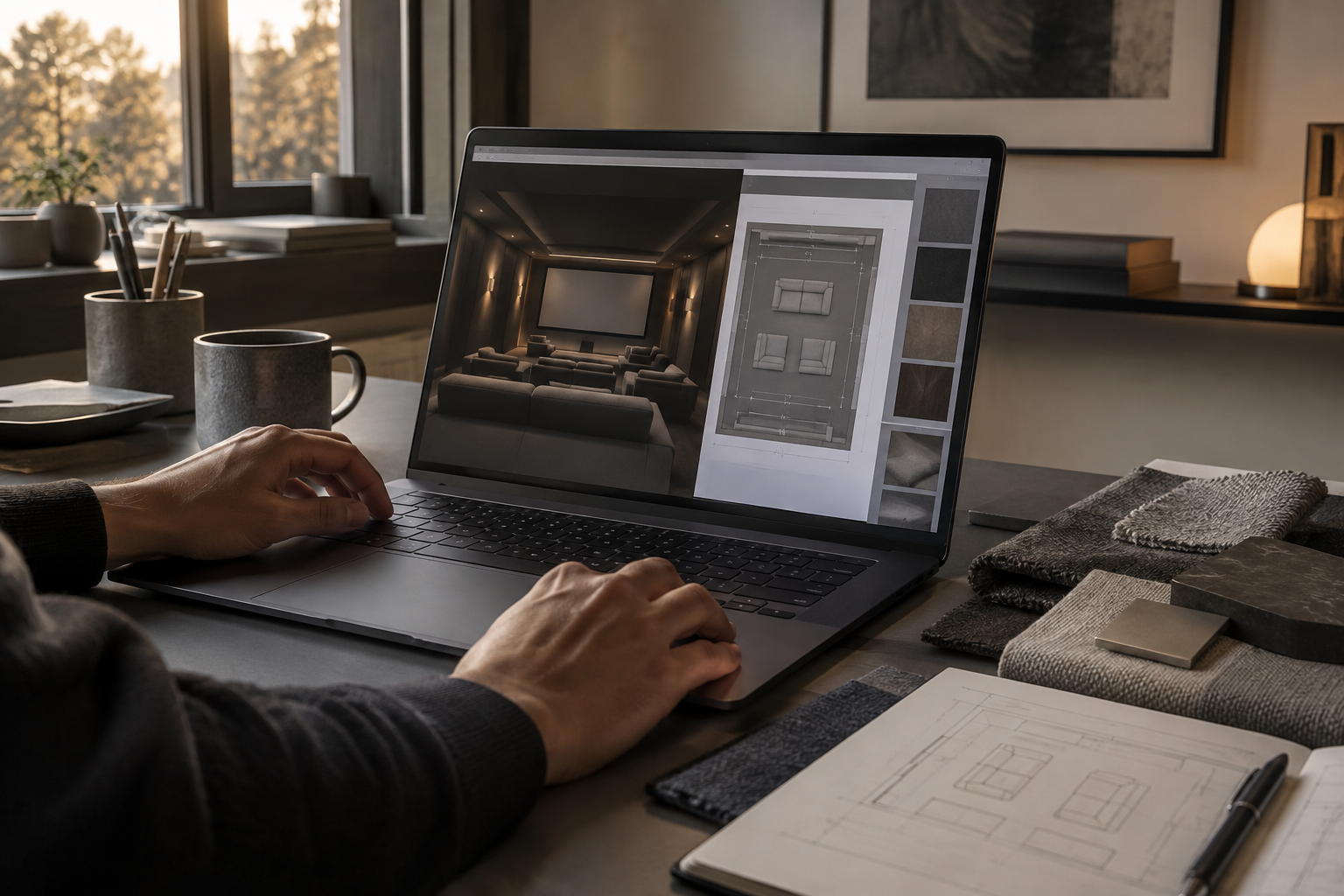
For a residential project, the useful shift is from describing an atmosphere entirely in words to discussing a shared visual reference. An owner could use an image-led brief to explain whether technology should disappear into joinery or form a visible feature. That is a decision about design intent, before anyone selects equipment.
A home cinema makes the distinction particularly clear. An image can suggest a screen occupying most of a wall, but it cannot establish a suitable viewing distance merely by looking plausible. Screen size, seating geometry and projector position need a measured plan; our analysis of 140-inch living-room projection explores why those relationships matter.
Acoustics introduce another layer that is not visible in a presentation image. Wall finishes that appear similar can behave differently acoustically, while loudspeaker placement has consequences beyond visual symmetry. An integrator should treat depicted fabrics, panels and concealed speaker positions as questions to resolve, not as specifications already settled.
ChatGPT’s broader limitations also apply to the conversation surrounding a picture. It can produce plausible but incorrect answers, and its training knowledge has a cut-off, although web search can retrieve newer information. A visually coherent room therefore does not make accompanying claims about equipment compatibility or product availability reliable.
There is a separate discipline for checking those claims. A visual brief establishes preferences; a documented specification establishes what is being supplied and why. The same distinction underpins using ChatGPT Deep Research for home technology specifications: research assistance does not remove the need to verify manufacturer documentation.
What people are saying
OpenAI’s stated improvements concern image creation, including better text rendering, rather than engineering validation. The company also applies safeguards intended to prevent harmful image generation. Neither feature should be read as an assurance that an interior shown by the system meets building requirements or equipment installation instructions.
For owners, the likely attraction is a lower barrier to expressing preferences before a formal design presentation. Someone unable to describe a particular balance of concealed technology and decorative detail could bring an image to the first meeting. Its value would lie in exposing preferences early, rather than replacing that meeting.
For integrators, the more useful reading is as a change in the material arriving with an enquiry. An AI-generated room may contain an apparently resolved arrangement of seating, lighting and screens, making it important to ask which elements the client actually wants. Otherwise, a casual visual suggestion risks becoming an unintended contractual expectation.
Architects and interior designers would need to distinguish three categories in such a brief: aesthetic preferences, physical constraints and unresolved technical choices. A dark ceiling may express a preference; an existing beam is a constraint; a projector recess needs investigation. Recording those differences gives each discipline something actionable without granting the image authority it does not possess.
What happens next
The facts available do not identify a forthcoming residential edition, an integration partnership or a launch date for specialist cinema-design functionality. The immediate question is consequently one of adoption: where should a general-purpose image tool sit within an existing design and approval process?
A sensible first step is to label generated visuals as exploratory and record the decisions each one is intended to support. For example, a discussion might compare exposed and concealed equipment, rather than seek approval for every object in the frame. A narrow question makes client feedback easier to translate into a real brief.
Images supplied to the service require their own judgement. Photographs of a private residence can reveal possessions, room layouts and access arrangements. Before uploading them, project teams should obtain appropriate permission and consider whether a cropped or less revealing reference would serve the same purpose.
ChatGPT allows users to opt out of having their chat data used to train upcoming models. It also offers optional memory functions, including remembering specific information and recalling earlier conversations. These are distinct considerations, and teams handling household information should understand ChatGPT memory and private home information before building a continuing project conversation.
At technical handover, approved drawings, equipment schedules and commissioning records should remain separate from exploratory images. A service engineer needs the installed system’s actual cable routes and settings, not an attractive earlier interpretation. Keeping visual references in their own clearly labelled folder prevents ambiguity when personnel change or a property is sold.
Why this matters
For a luxury home, the best use of ChatGPT image generation is to make the client’s intentions easier to interrogate before specialist design work advances. That could help an owner communicate priorities across architecture, interiors and AV, but the professional deliverable must still translate those priorities into measurable requirements. The meaningful approval is not that the picture looks right; it is that the proposed installation has been checked against the room, the equipment and the way the household intends to use it.
Questions answered
+When did ChatGPT switch to GPT Image?
OpenAI switched ChatGPT’s image generation from DALL-E to GPT Image in March 2025. DALL-E 3 had been integrated into ChatGPT in October 2023.
+Can ChatGPT create images from an existing photo?
Yes. GPT Image can generate new images based on existing pictures supplied in a prompt. For residential projects, permission and the sensitivity of information visible in photographs should be considered before uploading.
+Can ChatGPT design a home cinema?
It can help develop a visual brief, but an image does not establish acoustic performance, viewing geometry or installation feasibility. Those requirements need measured plans and specialist verification.
+Can ChatGPT put text in generated images?
GPT Image improved text rendering within images. Its performance is weaker with non-Latin alphabets, so labels and annotations still need checking.
+How can you identify ChatGPT-generated images?
ChatGPT-generated images include C2PA metadata, which can help establish their AI-generated origin. That provenance does not verify the technical accuracy of anything depicted.
+Can I stop ChatGPT using my chats for training?
ChatGPT users can opt out of having their chat data used to train upcoming models. This is separate from considering optional memory functions and what private project information to upload.
More in Latest Tech
 Latest Tech
ChatGPT translation and the multilingual smart home
ChatGPT offers a useful starting point for multilingual home manuals, but translating instructions is not the same as validating how a building works.
12 October 2026 · 5 min
 Latest Tech
ChatGPT memory puts private home information in focus
OpenAI’s conversational memory offers continuity, but owners and integrators need clear boundaries around the residential and yacht information they share.
10 October 2026 · 5 min
 Latest Tech
ChatGPT custom GPTs and the limits of home technology advice
OpenAI’s custom assistants offer a way to tailor technical explanations, but a convincing answer is not evidence that a residential system will behave as described.
10 October 2026 · 5 min