Shelly door sensors add tilt monitoring indoors and out
Two wireless contact sensors bring opening and inclination data to household automation, with a compact indoor model and an IP55-rated option for external access points.
By Davy Currie · · 5 min read
Key facts
- 01Shelly’s two new door sensors support Zigbee 3.0 and Bluetooth 5 LE.
- 02Shelly BLU Door/Window Mini ZB combines opening detection, tilt measurement and ambient-light sensing.
- 03Shelly claims up to two years of Mini operation from a CR2032 battery, depending on use.
- 04Shelly BLU Door/Window Outdoor ZB has an IP55 enclosure and a −20°C to 40°C operating range.
- 05Both Shelly sensors carry two-year warranties and are available through Shelly’s online shop and authorised resellers.
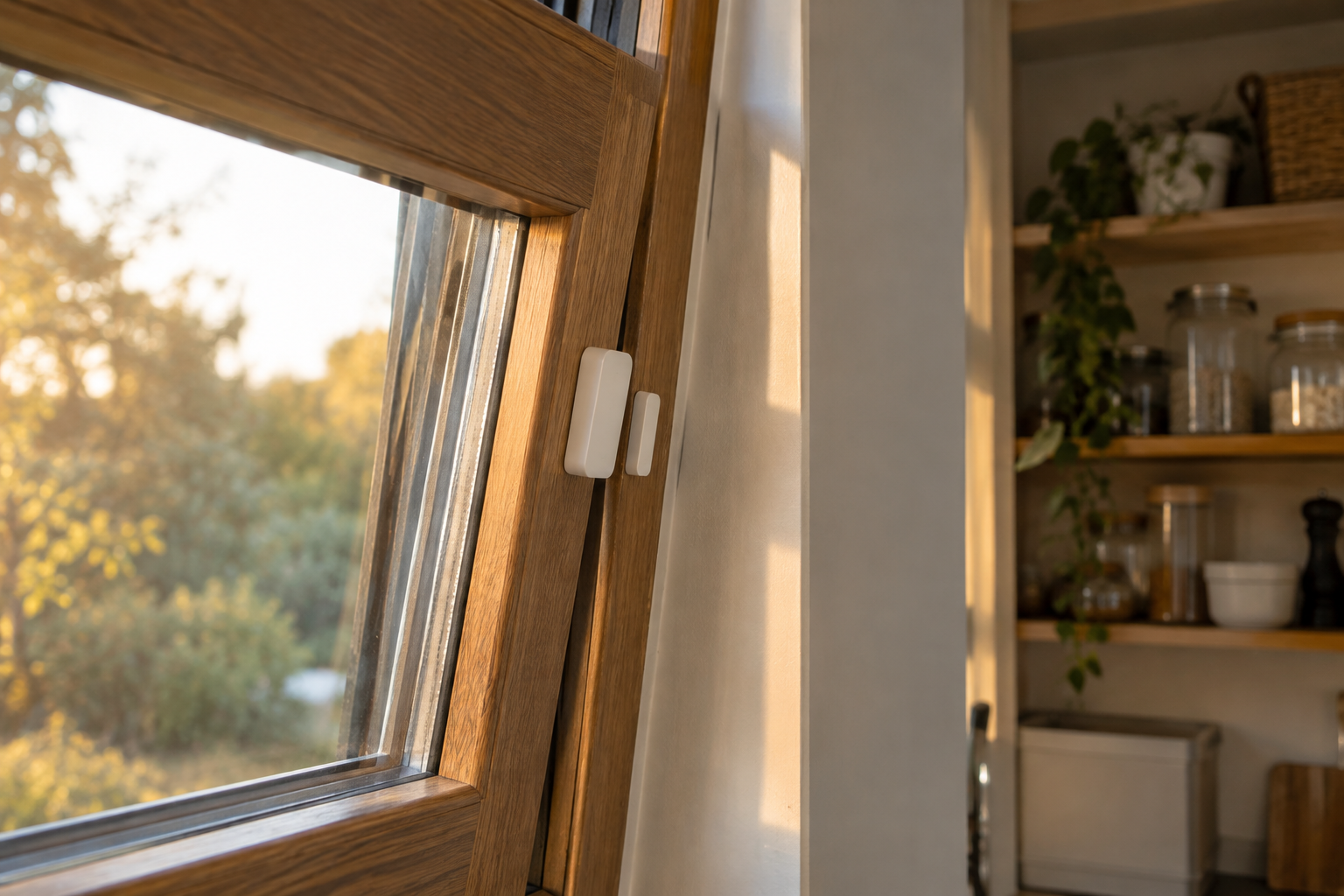
Shelly has added the BLU Door/Window Mini ZB and BLU Door/Window Outdoor ZB to its smart-home range, with both available as of 9 October 2026 following previews at IFA 2026 in Berlin. The two battery-powered sensors combine opening detection and tilt monitoring with Zigbee 3.0 and Bluetooth 5 LE, extending their usefulness beyond a simple open-or-closed signal.
What happened
The Mini is intended for indoor doors and windows where mounting space is restricted. Its smaller format is aimed at narrow frames that may not accommodate a larger contact sensor, a practical consideration when adding automation to existing joinery rather than specifying it during construction.
Alongside contact status, the Mini measures tilt angle and ambient light. Shelly describes applications ranging from adjusting heating, cooling or ventilation according to window position to switching on a cupboard or pantry light when the door opens in dim conditions.
Power comes from a CR2032 battery, with Shelly claiming up to two years of operation depending on use. The Mini has encrypted communications, comes in white, black and brown, and carries a two-year warranty. That endurance figure is a manufacturer claim rather than an independently established maintenance interval.
The Outdoor model targets garages, sheds, gates and greenhouse windows. Its enclosure is rated IP55, with a stated operating temperature range of −20°C to 40°C. It reports both opening status and inclination, allowing an automation system to respond to movement or a door remaining open.
Outdoor finishes are Ivory, Black and Mocha, and the warranty is also two years. Shelly gives examples including a timed alert for an open garage door and lighting activated by an external access point. Both products are on sale through Shelly’s online shop and authorised resellers; pricing was not included in the announcement.
The background
A conventional door contact supplies a binary input: the opening is either closed or not. An inclination measurement adds another variable that can help distinguish window positions. For automation, the potential benefit lies in choosing a proportionate response rather than treating every change of state as the same event.
Consider a room with automated heating and a window used for ventilation. An integrator could configure different responses to brief airing and a longer opening, with delays to avoid unnecessary switching. The sensor supplies information; the control system still needs the rules, timing and authority to act on it.
That distinction is particularly important where room controls meet central heating or cooling plant. As with the broader question of where KNX and building management systems should divide responsibility, adding a wireless input does not establish how competing demands will be resolved. Neither product’s announcement establishes native KNX support.
The wireless routes are clearly defined. Both sensors can connect directly to compatible Zigbee hubs, while Shelly Plus, Pro, Gen3 and Gen4 devices can serve as Bluetooth gateways. For an existing Shelly installation, those gateway options may influence which communication route is practical without adding another collection point.
Protocol compatibility, however, should not be confused with complete application compatibility. An integrator should check whether the chosen hub exposes the required contact, tilt and, for the Mini, light measurements to its automation engine. The wider issue of who controls a smart-home platform also applies: radio support alone does not describe cloud dependency, account requirements or behaviour during an internet outage.
The light sensor offers a separate opportunity in enclosed storage. Instead of linking every pantry opening to a lighting command, a configured system could make that action conditional on measured brightness. Positioning will matter: the reading needs to represent the space being illuminated, not simply a bright patch beside the frame.
What people are saying
Shelly positions the Mini around discreet installation and richer environmental information, while the Outdoor model addresses exposed access points. Its examples focus on everyday automation rather than a new central controller: the products add inputs to a system that must already be capable of issuing lighting commands, adjusting settings or delivering notifications.
For owners, the likely attraction is fewer unnecessary actions. A window-position input can make room automation more selective, but that benefit depends on commissioning against the actual opening mechanism. Installers should verify which physical positions produce distinct readings rather than assume every hinged, sliding or tilting window will yield equally useful information.
For integrators working across a large residence, battery operation changes the installation trade-off. It avoids providing a power cable at each sensing point, but introduces a service task distributed across doors, windows and outbuildings. A documented sensor inventory and accessible mounting positions become relevant to maintenance, particularly where staff rather than owners look after the property.
Security expectations also need managing. An alert about an open garage can be useful household information, but the announcement does not establish either product as part of a certified intruder-alarm system. They should be evaluated for the stated automation role, without assuming an equivalent level of supervision or response.
What happens next
With both models already available, the next step for a prospective installation is a compatibility and placement check rather than waiting for a launch date. The announcement does not provide physical dimensions or permitted sensing gaps, so narrow-frame suitability should be confirmed against product documentation before joinery or fixing positions are agreed.
External installations need a more demanding site survey. IP55 denotes protection against dust ingress and water jets within the rating’s limits; it is not a promise of suitability for submersion or every exposed environment. Direct sun can also make an enclosure’s local conditions different from the reported air temperature, making the 40°C upper limit worth checking at the intended position.
A garden gate or detached greenhouse introduces a radio-path question as well as a weather question. Distance, masonry and metalwork can affect wireless reception, so the useful test is reliable reporting from the final mounting point. A successful pairing beside the hub does not establish performance at the far end of a property.
Several purchasing details remain open in the announcement, including Outdoor battery type and expected endurance. The Mini’s two-year claim should not be transferred to the external model. Nor does the information establish a marine environmental rating, so yacht applications would require additional evidence concerning exposure and installation suitability.
Commissioning should also cover failure behaviour. Owners and integrators should agree what happens when a sensor stops reporting, a battery runs low or a gateway becomes unavailable. For any window-linked heating rule, an explicit fallback is more useful than leaving the system to rely indefinitely on its last received state.
Why this matters
For a carefully specified home, Shelly’s additions offer a way to bring more detailed information from awkward indoor frames and external openings into automation. Their value will be determined by the fit between sensor, gateway and control logic—not the number of measurements alone. The purchasing decision is therefore about usable inputs, verified coverage and maintainable installation, with particular care where comfort controls or security expectations depend on the result.
Questions answered
+What are the new Shelly door sensors?
The Shelly BLU Door/Window Mini ZB is a compact indoor sensor, while the BLU Door/Window Outdoor ZB is designed for external applications. Both detect opening status and measure inclination.
+Do the new Shelly door sensors support Zigbee?
Both models support Zigbee 3.0 and can connect directly to compatible Zigbee hubs. They also support Bluetooth 5 LE.
+Which Shelly devices can act as Bluetooth gateways?
Shelly Plus, Pro, Gen3 and Gen4 devices can operate as Bluetooth gateways for the new sensors.
+How long does the Shelly Door/Window Mini ZB battery last?
Shelly claims up to two years from the Mini’s CR2032 battery, depending on usage. The announcement does not provide an equivalent endurance figure for the Outdoor model.
+Can the Shelly Door/Window Outdoor ZB be used outside?
Yes. It is designed for applications including gates, garages, sheds and greenhouse windows. Its enclosure is rated IP55, with an operating temperature range of −20°C to 40°C.
+Does the Shelly Door/Window Mini ZB have a light sensor?
Yes. Its ambient-light sensor can support automations such as activating cupboard or pantry lighting when an opening is detected in low-light conditions.
+Where can I buy the new Shelly door sensors?
Both sensors are available through Shelly’s online shop and authorised resellers. Pricing was not included in the announcement.
More in Latest Tech
 Latest Tech
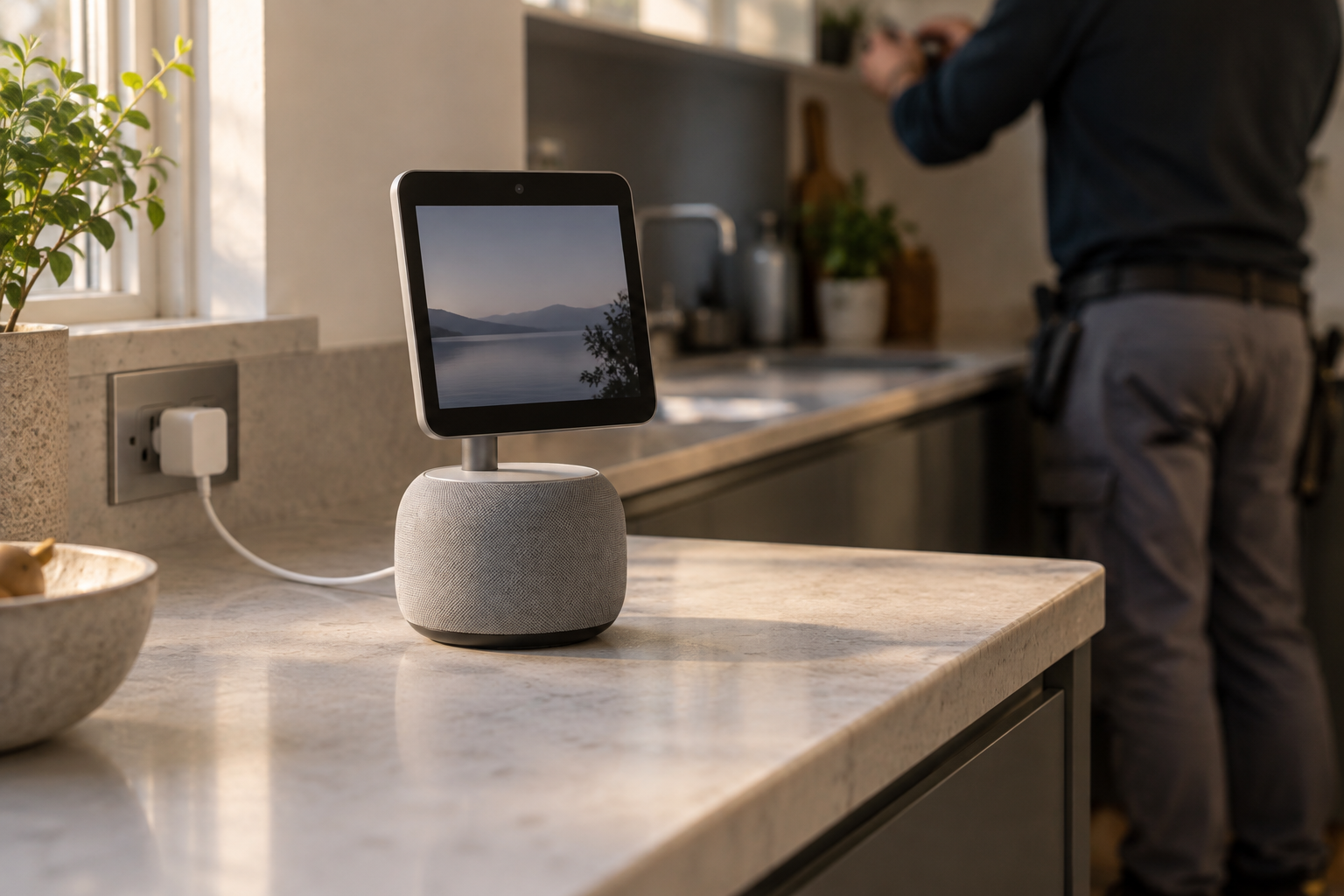
Apple HomePad reports point to a new smart-home control screen
A reported October launch could give Apple’s home platform a shared screen, but integration, privacy and availability remain the questions for residential projects.
9 October 2026 · 5 min
 Latest Tech
Artificial intelligence in smart homes: beyond the chatbot
Advances in language and reasoning are changing expectations of home technology, but useful intelligence also depends on sensing, reliable information and clearly defined objectives.
9 October 2026 · 5 min
 Latest Tech
Google smart home technology and the question of control
Google’s reach across Nest, Android, cloud computing and AI makes it influential in connected homes, but owners should distinguish platform capability from infrastructure resilience.
8 October 2026 · 5 min