MAC1010 barge puts KNX energy management to a live test
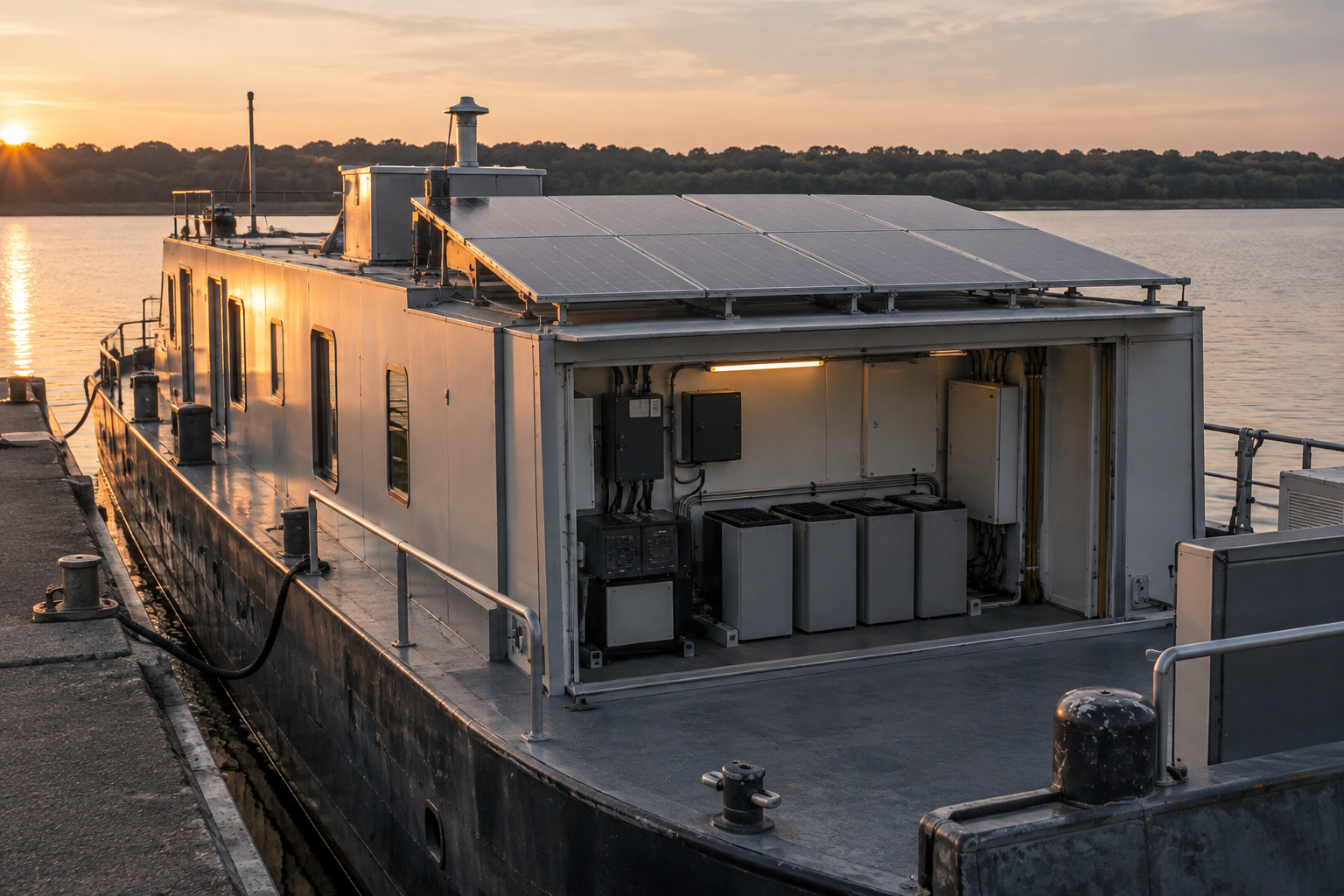
Luke Newland’s floating residential test bed will combine solar, batteries and KNX control to explore lower-carbon living on a restricted shore supply.
By Amara Okafor · · 5 min read
Key facts
- 01Luke Newland is converting MAC1010, an ex-naval barge, into a lived-in KNX energy-management test bed.
- 02MAC1010 targets 75% less carbon than a standard residential installation; that reduction has not been demonstrated.
- 03MAC1010’s shore supply is described as less than a quarter of a standard household electrical supply.
- 04MAC1010 combines planned solar generation, battery storage and an air-source heat pump in a three-bedroom residential model.
- 05MAC1010’s planned equipment includes Jung KNX devices, a Theben weather station and a Basalte Core logic server.
Luke Newland is turning the MAC1010 ex-naval barge into a lived-in test bed for KNX energy management, with a target of using 75% less carbon than a standard residential installation. Modelled on a three-bedroom home, the project will combine solar generation, battery storage and an air-source heat pump with coordinated electrical load control; its location and a calendar completion date have not been specified.
What happened
The integration project is already under way, led by Newland, the owner of systems integration company New Land Solutions. He is committing his own money and time to the conversion and intends to live with the installation, making household experience part of the testing rather than relying solely on demonstrations.
MAC1010 previously served a very different purpose: testing main generators during nuclear submarine refits. The conversion takes a vessel associated with dissipating substantial amounts of energy and gives it a new role investigating how renewable generation, storage and demand can be coordinated in a domestic setting.
The immediate constraint is its shore connection, described as providing less than a quarter of a standard household electrical supply. No amperage or power rating has been supplied, so that comparison should not be treated as a design specification. It nevertheless explains why controlling simultaneous demand is central to the project.
KNX will link the systems and distinguish between essential and non-essential electrical loads. The planned control logic will disconnect equipment that is not required or being used, while a smartphone interface will report available energy and show which services have been curtailed. That makes the consequences of energy decisions visible to the occupant.
The background
Solar panels, batteries and a heat pump perform three distinct jobs. Photovoltaics generate electricity; batteries shift some of that electricity to periods when generation is insufficient; an air-source heat pump uses electricity to move heat. The heat pump is therefore a heating-efficiency measure, not another source of electrical generation.
For a supply-constrained property, those distinctions matter. A battery can support demand beyond what an incoming connection alone can deliver, but only within its inverter rating and remaining charge. Solar output varies with conditions, while heating demand can rise when generation is weak. Control must reconcile those limits rather than assume renewable equipment automatically removes them.
MAC1010’s planned instrumentation includes Jung KNX actuators and multisensor room controllers, alongside a Theben weather station. These will contribute to the control and monitoring system, allowing operating conditions to be examined alongside energy performance. Basalte Core is designated as the logic server and the end-user interface for displaying consumption.
The useful distinction is between knowing how much electricity a property consumes and deciding what should happen next. Weather and room information can help control decisions reflect actual conditions, but performance assessment also depends on suitable electrical measurements. The project description does not set out the metering arrangement or the detail of its control rules.
This is a related challenge to the larger installations discussed in Victron’s approach to microgrids and smarter solar use: generation and storage become more useful when demand can respond to available power. MAC1010 applies that principle at a residential scale, with a restricted connection making the trade-offs particularly visible.
The wider integration context also matters. As explored in Newland Solutions’ work across luxury home technology, connected homes bring multiple specialist systems under one operational brief. Energy management adds another responsibility: deciding whether those systems should run, not simply whether they can be controlled.
What people are saying
Newland frames sustainability as more efficient use of energy without abandoning the comforts of a well-equipped home. His stated objective is not off-grid living for its own sake. MAC1010 will retain a shore connection, with solar and batteries intended to reduce reliance on it and provide flexibility when renewable output falls.
He also distinguishes the project from a conventional demonstration facility. Although the barge will include a 4K cinema room and a high-end audio system, its primary purpose is to expose practical issues and improve future client installations. Living aboard should bring daily routines into the evaluation, including occasions when different household demands overlap.
For an owner, that makes the proposed load hierarchy especially important. Essential and discretionary services need definitions that reflect how the household actually lives. A technically successful intervention could still be unwelcome if it interrupts a service the occupant expected to remain available; the published plans do not identify which circuits will receive priority.
Newland connects the approach to his company’s Digital Butler smart-home management service, which emphasises visibility across subsystems and responsibility for resolving faults. Applied to energy management, that position means an integrator should be able to explain whether an interruption arose from a deliberate control decision, unavailable energy or an equipment problem.
The 75% carbon reduction is an expectation, not a reported result. Owners and specifiers should read it as the project’s performance ambition: the description provides neither a measured operating period nor a calculation method for comparison with a standard residential installation. It cannot yet serve as evidence of an achieved saving.
What happens next
Newland intends to document the installation as it progresses and share lessons with the industry. His stated ambition was to finish the model within roughly a year of describing the project. Without a dated starting point, however, that relative timetable cannot reliably be converted into a completion date or a claim about its present status.
Several engineering details remain open, including solar capacity, usable battery storage, inverter output and heat-pump sizing. These figures would help establish how long the barge could sustain selected loads without drawing shore power, and whether its principal limitation is total daily energy or short periods of high demand.
The planned app is intended to demonstrate when incoming mains power is not being used. That is a useful operating observation, but it is different from proving an annual carbon reduction. A credible comparison would need to account for imported electricity across the assessment period and explain the residential baseline against which MAC1010 is judged.
Seasonal results would be particularly informative. Summer operation can show how effectively a system uses plentiful solar output, while colder periods test the relationship between heating requirements, battery availability and shore power. Publishing both would give residential designers a stronger basis for judging which lessons transfer beyond the barge.
Why this matters
For luxury-home owners and marine integrators, MAC1010’s value lies in testing how energy constraints affect an occupied, technology-rich environment. A cinema, heating system and battery may each work correctly in isolation yet require careful coordination when power is limited. If the project produces transparent measurements and clear accounts of its compromises, it could offer practical guidance on specifying controls, setting priorities and making lower-carbon operation compatible with everyday comfort.
Questions answered
+What is the MAC1010 floating sustainability project?
MAC1010 is an ex-naval barge being converted into a lived-in residential energy-management test bed. Led by Luke Newland, it will combine KNX control, solar generation, batteries and an air-source heat pump.
+How will KNX manage energy on MAC1010?
KNX will coordinate connected systems and distinguish essential from non-essential electrical loads. Planned logic will disconnect equipment that is not required or being used, while a smartphone interface will report available energy and curtailed services.
+Is MAC1010 an off-grid home?
No. MAC1010 has a shore connection, described as less than a quarter of a standard household electrical supply. Solar generation and batteries are intended to reduce reliance on that connection.
+Has MAC1010 achieved a 75% carbon reduction?
No measured result has been provided. The 75% reduction is a project target relative to a standard residential installation, and the calculation method and assessment period have not been specified.
+What equipment will MAC1010 use?
The plans name Jung KNX actuators and multisensor room controllers, a Theben weather station and Basalte Core. The installation also includes planned solar generation, battery storage, an air-source heat pump, a 4K cinema and high-end audio.
+When will the MAC1010 project be completed?
A calendar completion date has not been specified. Newland described an ambition to complete the model within roughly a year, but there is no dated starting point from which to establish that deadline.
More in KNX, Energy & Solar
 KNX, Energy & Solar
KNX and BMS: where luxury homes should draw the control line
As residential heating and cooling grow more complex, the important decision is not which control platform wins, but where responsibility sits.
7 October 2026 · 5 min
 KNX, Energy & Solar
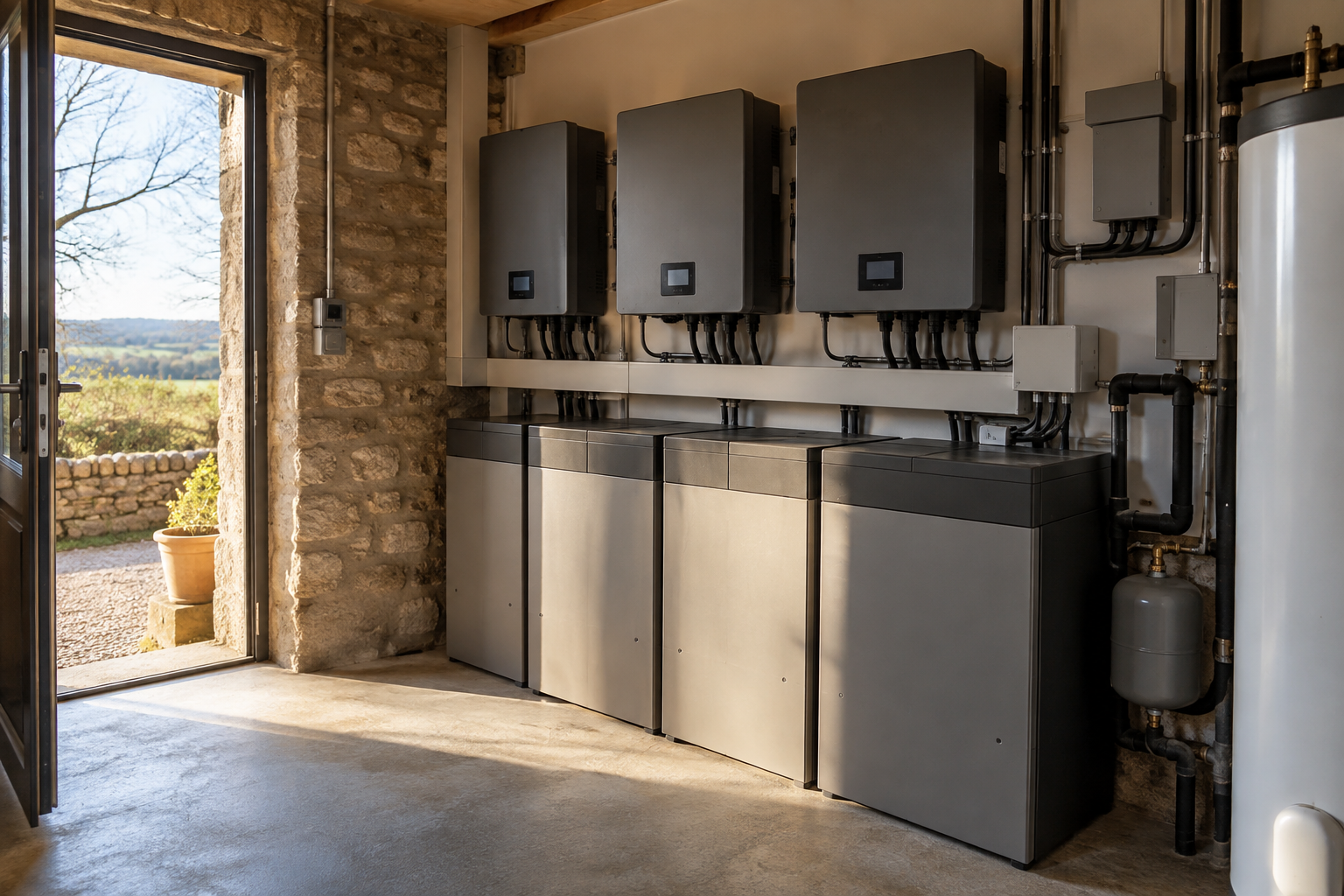
Victron targets 400kW microgrids and smarter solar use
Victron’s latest power architecture combines independent battery systems, while new GX controls direct surplus solar towards charging, hot water and pool equipment.
7 October 2026 · 5 min
 Luxury
Newland Solutions marks 20 years in luxury home technology
The British custom installation firm reaches its 20th anniversary this October, with work spanning smart home automation, AV, lighting control and energy systems.
7 October 2026 · 2 min