ChatGPT energy use belongs in the smart-home brief
Cloud-based AI moves computing beyond the property’s meter, creating a distinction between household electricity demand and the infrastructure supporting a connected home.
By Priya Raman · · 5 min read
Key facts
- 01OpenAI launched ChatGPT on 30 November 2022; its initial infrastructure used Microsoft Azure and Nvidia GPUs.
- 02TrendForce estimated that 30,000 Nvidia GPUs powered ChatGPT in 2023; this was not an electricity measurement.
- 03University of California, Riverside researchers estimated approximately 0.5 litres of cooling water for five to 50 prompts in 2023.
- 04ChatGPT reached a reported 900 million weekly active users in February 2026.
- 05The 2023 ChatGPT infrastructure estimates do not establish current electricity or water consumption for a British household.
OpenAI’s ChatGPT runs on remote computing infrastructure, so a home’s electricity meter cannot capture the full resource demand of using it. Research into its Microsoft-hosted infrastructure in 2023 included an estimate of 30,000 Nvidia graphics processors, while researchers at the University of California, Riverside estimated cooling-water consumption associated with conversations—historical figures that need careful handling in today’s smart-home energy brief.
What happened
ChatGPT’s expansion has made cloud computing a practical consideration for anyone specifying AI-assisted services in a residence. Released on 30 November 2022, the service reached a reported 900 million weekly active users in February 2026. That scale establishes its reach, but does not reveal the electricity attributable to any individual household.
The service initially relied on Microsoft Azure infrastructure supported by a supercomputer built specifically for OpenAI. It contained thousands of Nvidia graphics processing units, or GPUs, and cost hundreds of millions of dollars. Microsoft expanded the infrastructure in 2023 following ChatGPT’s early success.
TrendForce estimated that 30,000 Nvidia GPUs were used to power ChatGPT in 2023, with individual processors costing approximately $10,000–15,000. Those figures describe an estimated hardware deployment at a particular stage of the service’s development. They are not a current inventory, an electricity measurement or a basis for calculating the energy consumed by a particular prompt.
A separate 2023 estimate from University of California, Riverside researchers associated a sequence of five to 50 prompts with approximately half a litre of water for Microsoft server cooling. The wide range matters: it does not establish a fixed water allowance per question. Nor should water consumption be presented as though it were an electricity figure.
The background
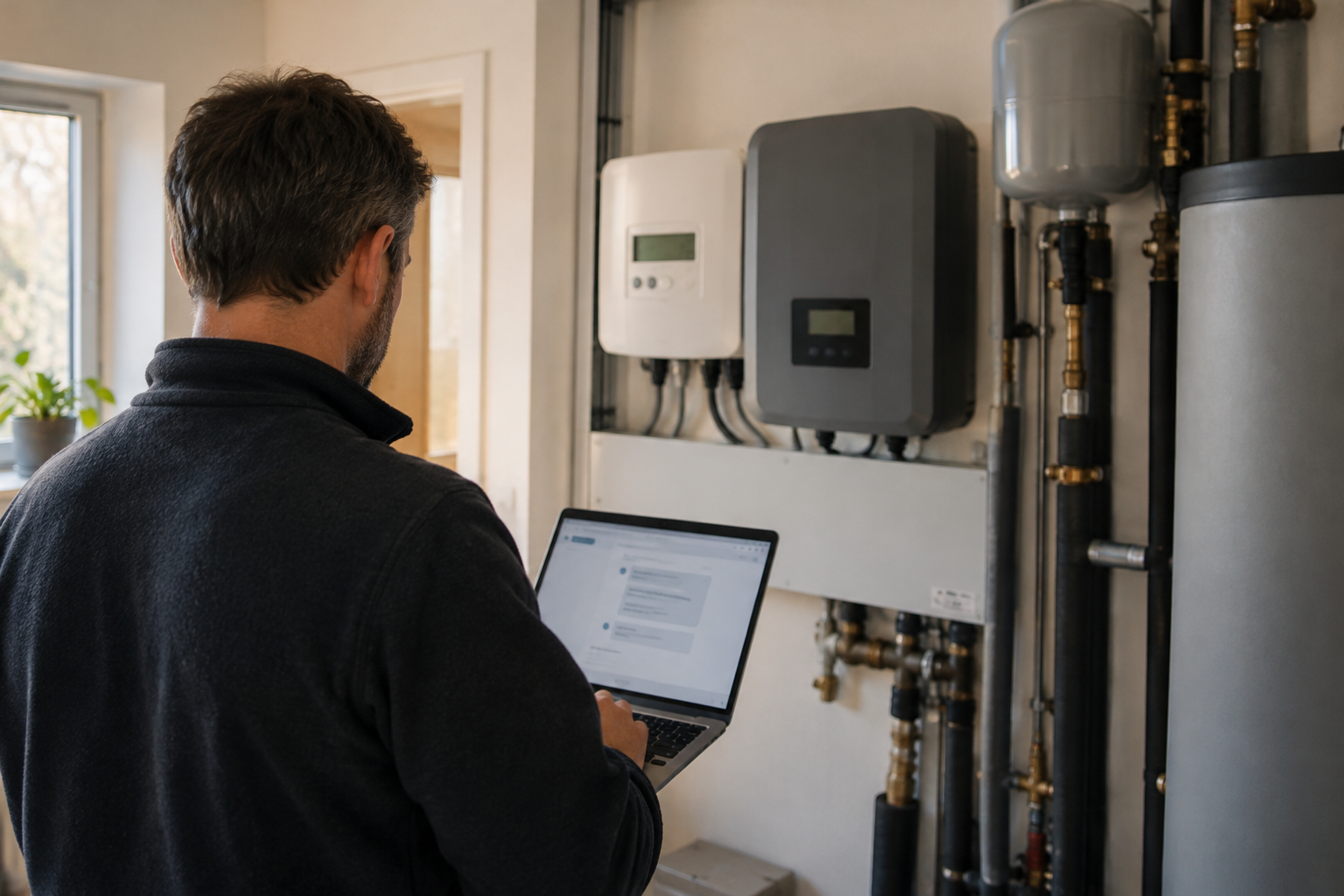
Luxury-home energy design normally begins with identifiable electrical loads: heating and cooling, lighting, cooking, pool plant, vehicle charging and audiovisual equipment. Their demand can be measured at the property and considered when sizing generation, storage and backup supplies. Cloud-based AI introduces an additional resource boundary because much of the computation happens elsewhere.
A laptop or tablet accessing ChatGPT still consumes electricity locally, as does the network equipment carrying its traffic. The remote servers’ consumption, however, will not appear on that property’s meter. An owner can therefore reduce measured household demand without necessarily reducing every resource used by the digital services available inside the house.
This distinction prevents a common specification error. A rooftop solar installation can supply the home’s connected devices, but that alone does not demonstrate that it supplies the remote computation behind their services. Any claim that an AI-assisted home operates entirely on its own renewable generation needs to state precisely which equipment and activities it includes.
ChatGPT also performs different kinds of work. Beyond text conversations, it supports audio and image interaction, web research and software-related tasks. A historical estimate expressed in prompts cannot safely be applied as a universal allowance across those activities: the unit describes an interaction, not a standardised quantity of computation.
Training and everyday operation are different activities, too. OpenAI develops models using training processes that include supervised learning and reinforcement learning from human feedback; users subsequently submit requests to the deployed service. An environmental comparison should identify which stage it measures rather than treating all AI computing as one interchangeable category.
For project teams, this is another reason to distinguish artificial intelligence in smart homes from the chatbot interface. A conversational service, a local sensor algorithm and an energy-management controller may all attract the AI label, but their location, dependencies and operational purpose need separate examination.
What people are saying
The figures available here come from researchers and an industry analyst, rather than an installation-level environmental declaration from OpenAI. TrendForce’s hardware estimate and the Riverside water estimate address different questions. Neither supplies a verified current carbon footprint for using ChatGPT in a British residence.
For owners, the sensible reading is that a low-power interface does not describe the whole service behind it. Equally, a large processor count does not establish that an individual interaction is disproportionately wasteful. Without workload, utilisation and energy information, either conclusion would go beyond the evidence.
Integrators should read the issue as a requirement for a more explicit system schedule. Alongside the equipment installed in the house, the brief should identify external services, the functions that depend on them and what remains available when those services cannot be reached. That provides a useful operational record even where supplier-level environmental figures are unavailable.
For energy consultants, the immediate task is to keep measurable household loads separate from wider service impacts. The distinction complements the question of where KNX and building-management systems should divide plant control: a conversational explanation of energy performance should not be mistaken for the controller responsible for operating equipment.
Captains face a comparable boundary when guests use cloud services aboard a yacht. Onboard power supports the terminal and communications equipment, while remote computation remains outside the vessel’s electrical measurement. That makes connectivity and fallback behaviour separate procurement questions from generator or battery capacity.
What happens next
The available information does not establish a current, independently verified electricity or water figure for a specified ChatGPT task. It also contains no announced timetable for a household-level resource reporting facility. A project should therefore record that information gap rather than fill it with a calculation extrapolated from 2023 estimates.
A useful supplier enquiry would ask what is being measured, over which period and for which workload. It should distinguish electricity from water, identify whether training is included, and explain whether the results represent a particular facility or a broader service average. Those boundaries determine whether two environmental claims can reasonably be compared.
The local electrical design should still be based on the equipment actually installed. Remote GPU estimates do not belong in a household inverter calculation or a yacht’s generator load schedule. Conversely, excluding remote computing from those engineering calculations does not justify excluding it from a wider sustainability discussion.
Continuity deserves its own test. Battery backup for a router and control processor cannot guarantee access to an external AI service if the communications link or remote platform fails. The practical response is a documented fallback, consistent with the connected home’s wider cloud-service resilience plan.
At handover, owners should receive a clear distinction between measured results and estimates. Household energy records can document local consumption; any account of the associated cloud footprint should name its assumptions and date. Keeping the two separate makes subsequent supplier updates easier to assess without rewriting the property’s verified performance history.
Why this matters
For a luxury residence or superyacht, ChatGPT’s infrastructure raises a question of specification discipline rather than a new electrical load to add blindly to the design. Owners need to know what their meters measure, which functions depend on remote computing and where environmental evidence stops. That allows AI services to be assessed without confusing an efficient property with a fully accounted-for digital supply chain.
Questions answered
+How much energy does ChatGPT use?
The available figures do not establish current electricity consumption for a specified ChatGPT task. A 2023 estimate of 30,000 GPUs describes hardware, not energy use, and cannot determine the electricity attributable to one household.
+How much water does ChatGPT use?
University of California, Riverside researchers estimated in 2023 that five to 50 prompts were associated with approximately half a litre of water for Microsoft server cooling. This historical estimate is not a fixed or current per-question allowance.
+Does ChatGPT use electricity in my home?
Your device and network equipment consume electricity locally. ChatGPT’s remote servers also require power, but their consumption does not appear on your household electricity meter.
+Can solar panels power ChatGPT?
Household solar panels can supply the devices and network equipment used to access ChatGPT. That does not establish that they supply the remote computing infrastructure supporting the service.
+How many GPUs does ChatGPT use?
TrendForce estimated that 30,000 Nvidia GPUs powered ChatGPT in 2023. That historical estimate should not be treated as a current hardware inventory.
+Will a home battery keep ChatGPT working during an outage?
Battery backup can support local devices and networking equipment, but cannot guarantee access to ChatGPT if the communications link or remote service fails.
+Should ChatGPT be included in a smart-home energy assessment?
The assessment should distinguish measurable local electricity consumption from the wider impacts of remote computing. Any cloud-footprint estimate should identify its assumptions, measurement boundaries and date.
More in KNX, Energy & Solar
 Latest Tech
ChatGPT sycophancy puts smart-home design reviews at risk
OpenAI’s withdrawal of an overly agreeable update exposes a practical problem for residential technology projects: an assistant that endorses a brief is not independently checking it.
15 October 2026 · 5 min
 Latest Tech
ChatGPT model changes challenge smart-home handovers
OpenAI’s expanding model range raises a practical question for integrators: how should AI-assisted project work remain accountable when the underlying software changes?
12 October 2026 · 5 min
 Latest Tech
ChatGPT Health excludes UK from its initial rollout
OpenAI’s dedicated health feature creates a new consideration for connected wellness spaces, but its initial availability excludes the UK and much of Europe.
15 October 2026 · 5 min