Google Android ruling puts home interface choices in focus
The US decision left Android and Chrome with Google, but luxury-home specifications still need to distinguish familiar interfaces from dependable building control.
By Davy Currie · · 5 min read
Key facts
- 01In September 2025, US judge Amit Mehta ruled that Google need not divest Chrome or Android.
- 02The September 2025 ruling also barred exclusive contracts for Google Search.
- 03Google's portfolio includes Android, Chrome, Nest, Pixel, YouTube, Workspace and Gemini.
- 04Advertising accounted for 73% of Google's revenue in 2025.
- 05Google became Alphabet's largest subsidiary following the restructuring announced on 10 August 2015.
Google was not required to sell Chrome or Android under a September 2025 ruling by US federal judge Amit Mehta, which also barred exclusive contracts for Google Search. For luxury-home technology projects, the decision concerns the ownership of two widely encountered software platforms—not a guarantee that devices, apps or control systems will remain compatible.
What happened
The US ruling left Google's browser and mobile operating system within the company while restricting exclusivity around its search service. Those are distinct outcomes: retaining a software business determines who controls its development, whereas a restriction on search contracts addresses how a service reaches users.
This is a look at the implications of that September 2025 decision, rather than a new court announcement. No residential product launch, home-control compatibility commitment or installation deadline accompanies the ruling described here. Owners should therefore resist treating it as either an instruction to replace equipment or an assurance that an existing specification needs no further scrutiny.
Android matters to residential projects because an operating system can sit beneath the apps through which occupants interact with their home. Chrome is relevant wherever browser access forms part of an interface or service workflow. Neither role makes Google the designer of the underlying lighting, heating or audiovisual installation.
The restriction on exclusive Google Search contracts should not be read as a requirement for smart-home interoperability. Search distribution, device discovery and control-system communication solve different problems. A procurement document that simply asks for an “open platform” leaves those distinctions unresolved; it should identify which functions must work across which products.
The background
Google's reach extends well beyond the search engine that established the business. Its portfolio includes Android, Chrome, Nest, Pixel, YouTube, Workspace and Gemini, covering operating systems, domestic devices, entertainment, productivity and artificial intelligence. A single residence can consequently encounter the same supplier through several otherwise separate purchasing decisions.
That breadth creates a specification issue rather than an automatic defect. A Pixel handset, a Nest device and a YouTube viewing service may all belong to Google's portfolio, but common ownership alone does not establish shared support periods, identical permissions or compatibility with a third-party control processor. Each proposed connection needs its own evidence.
The corporate structure also deserves precision. Google became Alphabet's largest subsidiary following the restructuring announced on 10 August 2015; Sundar Pichai became Google's chief executive that year and Alphabet's chief executive in 2019. For an owner commissioning support, however, the practical question is which entity and installer have undertaken to maintain the particular service—not simply the name of the parent group.
Google's commercial incentives are relevant background, too. Advertising accounted for 73% of its revenue in 2025, according to the figures available for this account. That does not establish how any individual home device handles information, but it reinforces the need to examine product-specific privacy terms rather than infer them from the apparent simplicity of a screen or app.
Its history also contains discontinued services, including Stadia, Reader and Play Music. Those closures do not predict the fate of Android or Chrome. They do demonstrate why a supplier's scale cannot substitute for an agreed migration route, an issue explored in our assessment of Google service-retirement planning for smart homes.
What people are saying
The ruling provides a judicial position on divestment and search exclusivity; it does not provide a residential technology roadmap. There is no home-integration statement accompanying the facts considered here. The useful interpretation is therefore to examine how owners and integrators might assess the outcome, rather than attribute assurances to Google that it has not made.
An owner may reasonably see continued ownership as removing one possible source of organisational upheaval. That is narrower than certainty about future software. The appropriate reassurance would come from a documented support arrangement specifying responsibility for updates, account recovery and fault diagnosis across the devices actually installed.
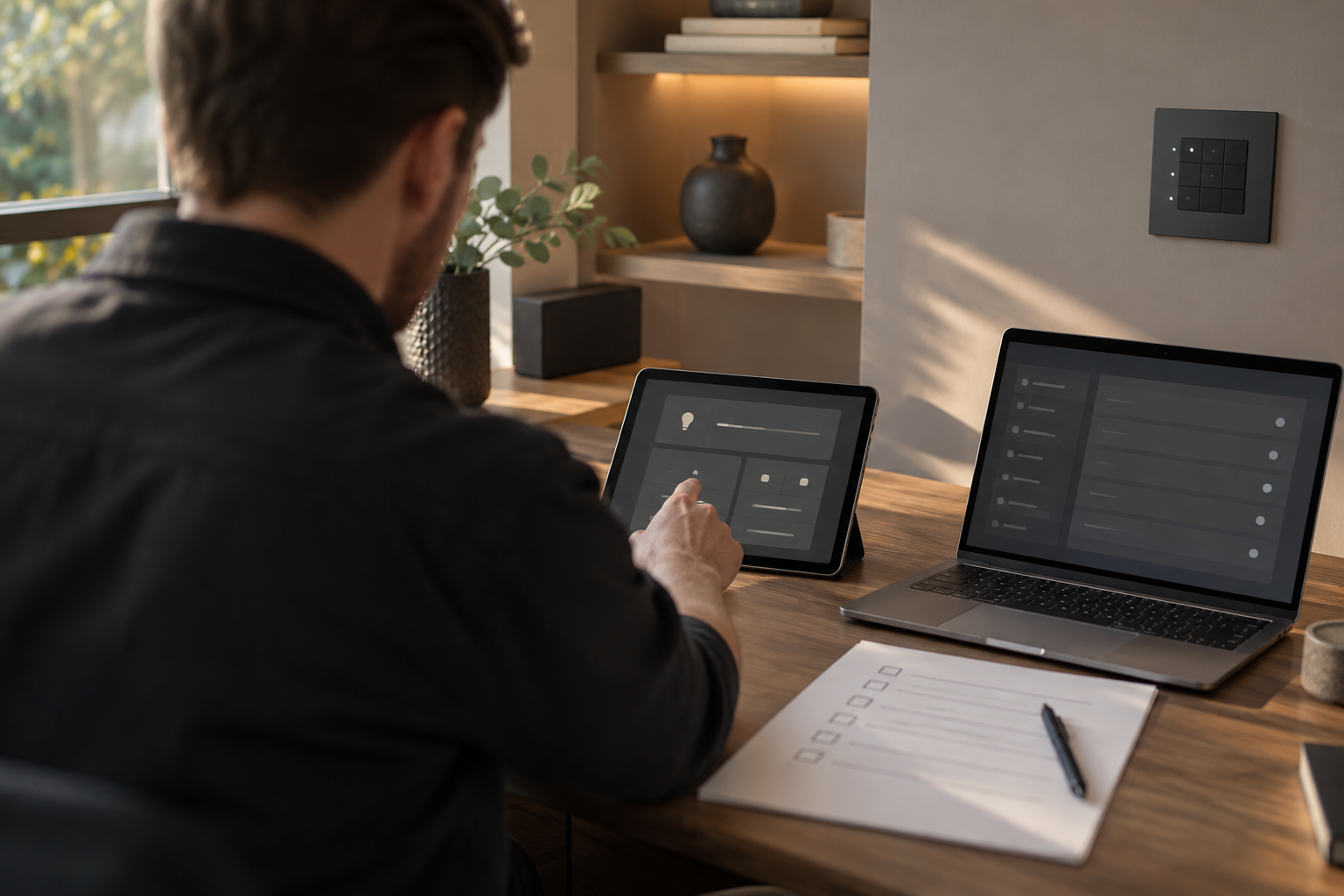
For integrators, the important distinction is between an interface and the system it operates. A phone can provide convenient access without being the only means of changing a room's lighting or temperature. Where a browser or mobile app is proposed as essential, the design review should identify what remains usable when that interface is unavailable.
Developers face a further question at handover: whether access follows the property or the individual account holder. A demonstration using an installer's logged-in device proves little about the purchaser's eventual experience. Acceptance testing should use the intended ownership arrangement and show how permissions transfer without exposing the previous user's information.
These are consequences of Google's overlapping roles, not objections to a particular operating system. Our examination of Google smart-home platform control addresses the broader distinction between choosing a convenient ecosystem and understanding who can change its behaviour.
What happens next
The material available here supplies no subsequent appeal outcome, detailed implementation timetable or new Android and Chrome support commitments. Those remain matters to verify separately. A project proceeding now should use current product documentation and contractual terms, rather than assume that the September 2025 ruling settled every question about distribution or future development.
The first practical step is a dependency schedule. For each user-facing function, an integrator should identify the device, operating system, application, account and any remote service needed to deliver it. This turns an imprecise requirement such as “control from a tablet” into a set of components that can be tested and supported.
The next step is failure testing, proportionate to the function. Loss of an entertainment preference is different from losing the usual means of operating essential room services. Testing should distinguish a disconnected internet connection from a failed local network, an expired login or an unavailable cloud service; our guide to connected-home resilience during Google cloud outages explains why those boundaries matter.
An update policy should then define who checks app and browser changes against the installed system. This need not mean preventing routine security updates. It means assigning someone to investigate compatibility problems, maintain recovery instructions and confirm that any dedicated interface remains fit for its intended use after a change.
Finally, the handover pack should separate equipment warranties from software and service obligations. A replacement screen may solve a hardware failure while leaving an account or application problem untouched. Recording the responsible support contact for each layer gives owners and estate managers a clearer route to resolution than a single undifferentiated equipment list.
Why this matters
For a prime residence, Google's continued ownership of Android and Chrome is background to the specification, not a measure of installation quality. The enduring decision is where to place dependence: which conveniences may rely on a personal device or external service, and which household functions require another means of operation. A well-commissioned home makes those choices explicit before its interfaces become part of everyday life.
Questions answered
+Does Google have to sell Android?
Under the September 2025 ruling by US federal judge Amit Mehta, Google was not required to divest Android. This account does not establish any subsequent appeal outcome.
+Does Google have to sell Chrome?
The September 2025 ruling did not require Google to divest Chrome. That ownership decision does not constitute a commitment about browser compatibility with individual home-control systems.
+What did the Google Search ruling change?
The ruling barred exclusive contracts for Google Search while not requiring the divestment of Chrome or Android. The facts considered here do not provide a detailed implementation timetable.
+Does the Google ruling make smart-home devices interoperable?
The ruling described here addresses divestment and search exclusivity, not smart-home interoperability. Compatibility between an interface, application and home-control system still needs separate verification.
+What should a smart-home dependency schedule include?
It should identify the device, operating system, application, account and any remote service needed for each user-facing function. This gives integrators a defined set of components to test and support.
+Is Google owned by Alphabet?
Google became Alphabet's largest subsidiary following the restructuring announced on 10 August 2015. Sundar Pichai became Google's chief executive in 2015 and Alphabet's chief executive in 2019.
More in Latest Tech
 Latest Tech
Google OSV-Scanner and the smart-home software security gap
Google’s open-source vulnerability tool offers a useful reference point for integrators assessing the software behind bespoke home technology.
13 October 2026 · 5 min
 Latest Tech
Google cloud outages and the connected home’s resilience plan
Google’s historical service interruptions offer a practical lesson for luxury homes: internet access, cloud availability and local control need separate resilience plans.
13 October 2026 · 5 min
 Latest Tech
Google advertising puts smart-home product research in focus
Advertising supplied 73% of Google’s revenue in 2025, making the distinction between product discovery and technical verification important for luxury-home projects.
13 October 2026 · 5 min