Rako Controls adds Dubai office for Middle East lighting projects
The British lighting-control manufacturer’s Business Bay office will support Middle East projects from specification through commissioning and after-sales care.
By James Whitcombe · · 5 min read
Key facts
- 01Rako Controls’ first Middle East office is operational in Dubai’s Business Bay.
- 02The opening was announced on 12 November 2026, following Rako’s Clerkenwell studio opening earlier that year.
- 03Rako’s Dubai team will support residential, hospitality and commercial lighting-control projects throughout the Middle East.
- 04Rako’s stated support remit runs from early specification through commissioning and after-sales care.
- 05Managing director Paul Wafer says Rako will develop new partnerships alongside its existing regional relationships.
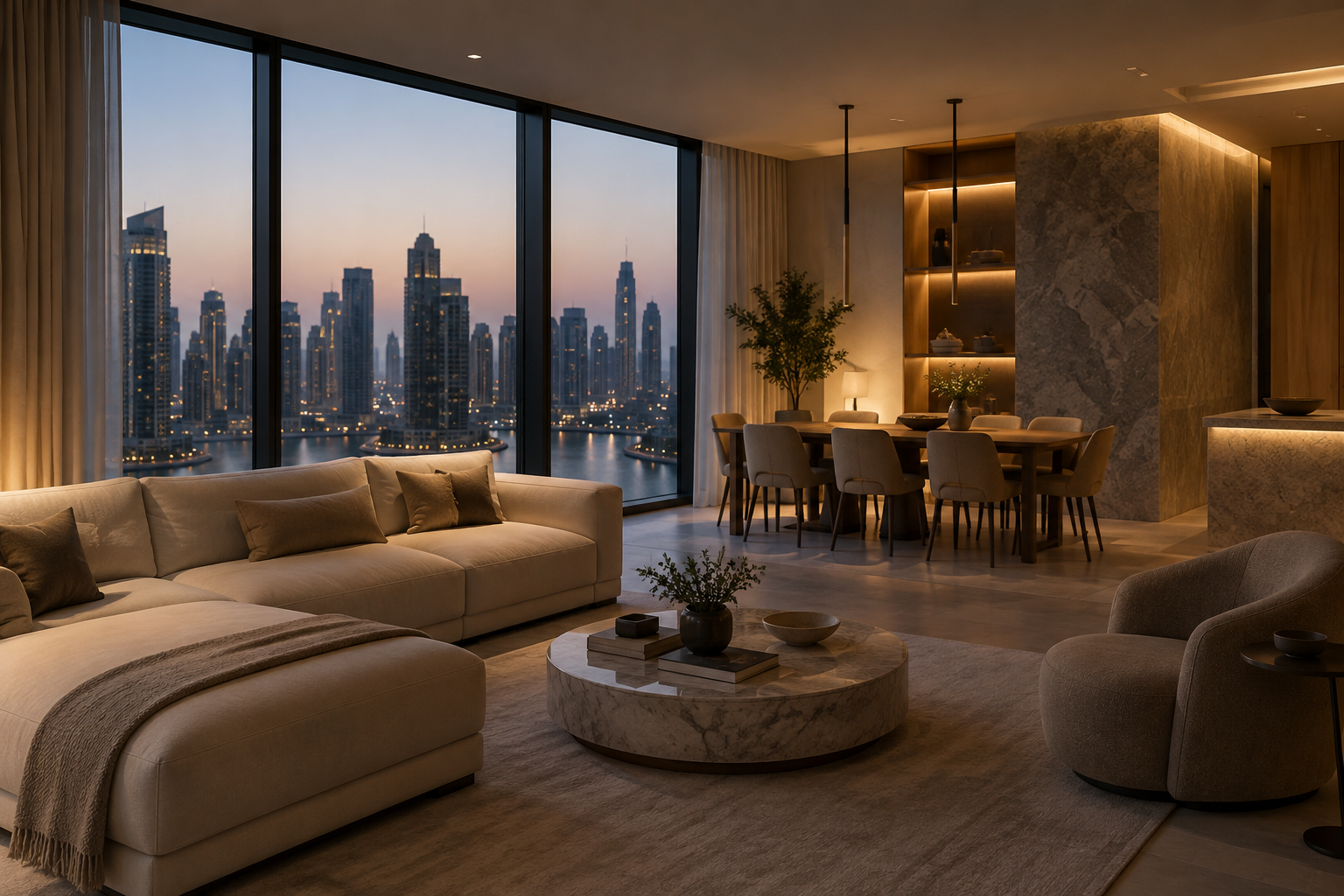
Rako Controls has established its first Middle East office in Dubai’s Business Bay, adding a permanent regional base for its lighting-control business. The opening, announced on 12 November 2026, brings support for specification, installation, commissioning and after-sales care closer to residential, hospitality and commercial projects across the region.
What happened
The office is already operational and will handle product enquiries, system specifications, technical guidance and project delivery. For the Kent-based manufacturer, this is a geographical expansion of its support operation rather than the announcement of a new lighting-control product.
Rako says its Dubai team will work with lighting designers, interior designers, architects, installers and integrators. That breadth matters because lighting control sits between several professional disciplines: the designer establishes the intended experience, the installer delivers the electrical infrastructure, and the integrator makes the controls work within the wider property.
The stated remit extends from early planning to commissioning and after-sales support. In a prime residential project, those are distinct responsibilities. Advice before electrical installation can influence the system specification; commissioning establishes how the finished rooms behave; subsequent support addresses faults, adjustments and changes in use.
The company attributes the investment to growing regional demand across residential, hospitality and commercial work. It has not supplied sales figures, a project pipeline or a breakdown between those sectors, so the opening establishes a stronger local presence without quantifying the scale of the business behind it.
The background
Dubai follows the opening of Rako’s Clerkenwell studio earlier in 2026. Together, the two locations show the manufacturer investing in closer contact with the people who specify and deliver its systems, although the Dubai announcement does not describe the new office as a demonstration studio or showroom.
For a luxury home, lighting control is rarely an isolated purchase. Decisions about dimming, circuits, keypads and programmed scenes intersect with interior finishes, electrical design and the owner’s daily routines. Manufacturer involvement while those decisions remain open can help teams identify questions before construction makes alterations disruptive.
One practical example is the relationship between a lighting circuit and its intended control behaviour. A design may call for several fittings to act together in one scene but separately in another. Resolving that requirement requires coordination between the lighting schedule, electrical drawings and control specification; a support office cannot correct an ambiguous brief without the project team first documenting it.
There is also a distinction between manufacturer assistance and responsibility for the completed installation. The announcement does not say that Rako will take over an integrator’s contractual duties. Owners should therefore establish who designs, installs, programmes and accepts the system, even where the manufacturer provides guidance at each stage.
The expansion sits alongside other moves to place integration expertise nearer clients, including Yacht Intelligence’s addition of three roles in Florida. The relevant comparison is service geography: a local presence can create more direct working relationships, but its practical value still depends on the people, capabilities and responsibilities available to each project.
What people are saying
Paul Wafer, Rako Controls’ managing director, presents the Dubai opening as both an international growth milestone and evidence of a long-term commitment to the Middle East. His explanation centres on working more closely with designers, specifiers and integration partners rather than simply adding another sales address.
Wafer also says the company intends to develop new partnerships while building on existing regional relationships. That is an important distinction for current customers: Rako describes an expansion of its network, not a replacement of the partners already serving the market. The announcement does not identify those partners or explain how enquiries will be allocated between them and the Dubai team.
For architects and interior designers, the likely attraction is earlier access to product guidance. Control interfaces have architectural consequences, including their positions and relationship to other wall-mounted fittings. Bringing the relevant technical conversations into the design programme is more useful than treating control selection as a decision deferred until the interiors are substantially fixed.
Integrators are likely to assess the office through the quality of its technical engagement: whether questions receive clear answers, whether advice relates to the documented installation, and whether unresolved issues have an identifiable owner. These are practical tests of the support proposition, not performance claims established by the opening announcement.
For owners, local availability should prompt a more precise service conversation rather than an assumption of guaranteed attendance. As with the wider need for a clear smart-home support escalation plan, the useful document is one that explains who responds, what information they need and when an issue moves from installer to manufacturer.
What happens next
Rako’s announced next step is to expand its regional network while supporting projects through the new office. No further opening dates, named appointments or additional Middle East locations have been disclosed. The Business Bay operation is available now; the pace and shape of subsequent expansion remain unspecified.
A project team considering the office’s services should establish the route for submitting drawings, lighting schedules and technical questions. Agreeing a common revision of those documents is particularly important where the architect, lighting designer and integrator work for separate organisations. Advice based on an outdated schedule can be technically sound yet unsuitable for the installation being built.
Commissioning support also warrants definition before it enters a contract. The announcement does not specify whether assistance will be remote, on site or a combination of both, nor does it give response-time commitments or geographic attendance limits. A regional remit should not be read as a promise of identical service arrangements in every Middle Eastern market.
At handover, owners should ask their appointed contractor to record the agreed lighting scenes, control functions and outstanding adjustments. That gives after-sales discussions a concrete reference: a room behaving differently from the accepted configuration is a different problem from an owner requesting a new setting. Rako’s broader support presence does not remove the need for that project-level record.
The remaining commercial questions include staffing, training provision and the balance between specification assistance and post-installation support. None is answered by the announcement. Those details will determine how the new base translates into capacity for individual residential projects.
Why this matters
For prime-home owners and their professional teams, Rako’s Dubai investment creates a more direct regional route to the manufacturer behind the lighting controls. The procurement implication is to bring that expertise into the project while design choices can still be changed, then record its role alongside the installer’s and integrator’s obligations. A permanent office is a useful addition to the support chain; a well-defined appointment turns that presence into something an owner can rely on.
Questions answered
+Where is Rako Controls’ Dubai office?
Rako Controls’ Dubai office is in Business Bay. It is the British lighting-control manufacturer’s first office in the Middle East.
+Is Rako Controls’ Middle East office open?
Yes. The office was described as operational when its opening was announced on 12 November 2026.
+What support does Rako Controls offer in Dubai?
The office will handle product enquiries, system specifications, technical guidance and project delivery, with a stated remit covering early planning, commissioning and after-sales support.
+Does Rako’s Dubai office support residential projects?
Yes. Residential projects are part of its remit, alongside hospitality and commercial installations throughout the Middle East.
+Who will Rako’s Dubai team work with?
Rako says the team will work with lighting designers, interior designers, architects, installers and integrators.
+Will Rako provide on-site commissioning support in the Middle East?
Commissioning is included in the stated support remit, but Rako has not specified whether assistance will be remote or on site, or disclosed attendance limits and response-time commitments.
+Is Rako’s Dubai office a showroom?
The announcement describes an office providing technical and project support. It does not identify the Business Bay premises as a showroom or demonstration studio.
More in Latest Tech
 Latest Tech
AMD World Labs deal puts spatial AI on the home-tech agenda
AMD’s announced $8.2 billion acquisition targets spatial intelligence, but its relevance to private homes depends on applications, privacy safeguards and integration tools still to be detailed.
13 November 2026 · 5 min
 Latest Tech
Google’s search monopoly ruling and home-tech choice
The US search monopoly judgment raises a practical question for private-home procurement: how independently are technology shortlists assembled?
13 November 2026 · 5 min
 Latest Tech
Nvidia leadership change puts home-tech continuity in focus
Colette Kress is named interim chief executive following Jensen Huang’s reported resignation, raising questions about continuity rather than immediate changes to residential technology.
12 November 2026 · 5 min